
















Transform noisy meeting spaces into focused, professional environments with expert conference room soundproofing solutions.
Studio soundproofing keeps traffic, generators and neighbours out of your recordings and keeps your sessions from disturbing others. Studio acoustics then make the room sound accurate, so mixes translate. Sound Krafted designs and builds both for music studios, podcast rooms, vocal booths and university media studios in Lahore and across Pakistan.
A recording room is only as good as its quietest moment. In Pakistani cities that means dealing with rickshaws, generators, UPS hum, rooftop air-conditioners and the neighbour’s construction. Our team has worked in acoustics since 2021 and has built studios for the Punjab Council of the Arts, universities and media companies.
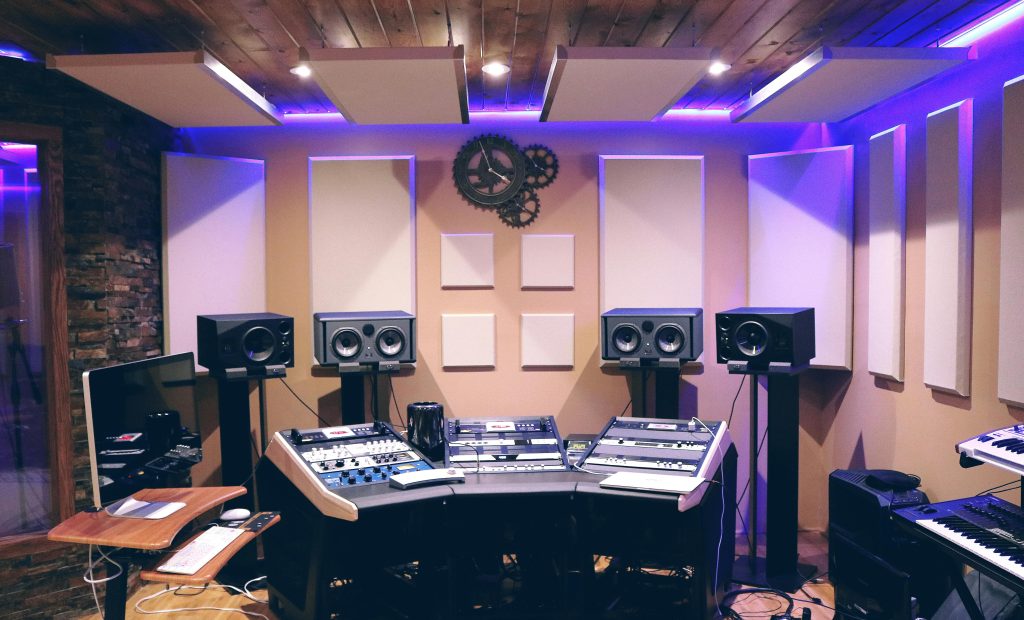
| Isolation (soundproofing) | Treatment (acoustics) | |
|---|---|---|
| Purpose | Stop sound getting in or out | Make the room sound accurate |
| Built from | Mass, airtight seals, decoupled walls, floors and ceilings | Absorbers, bass traps, diffusers |
| Typical items | Room-within-a-room, floating floor, acoustic doors, sealed glazing, silenced ventilation | Panels at reflection points, corner bass traps, ceiling cloud, rear-wall diffusion |
| What foam does | Almost nothing | Helps with high frequencies only |
For television, chroma and news studios, including lighting, cameras and the control room, see TV studio setup.
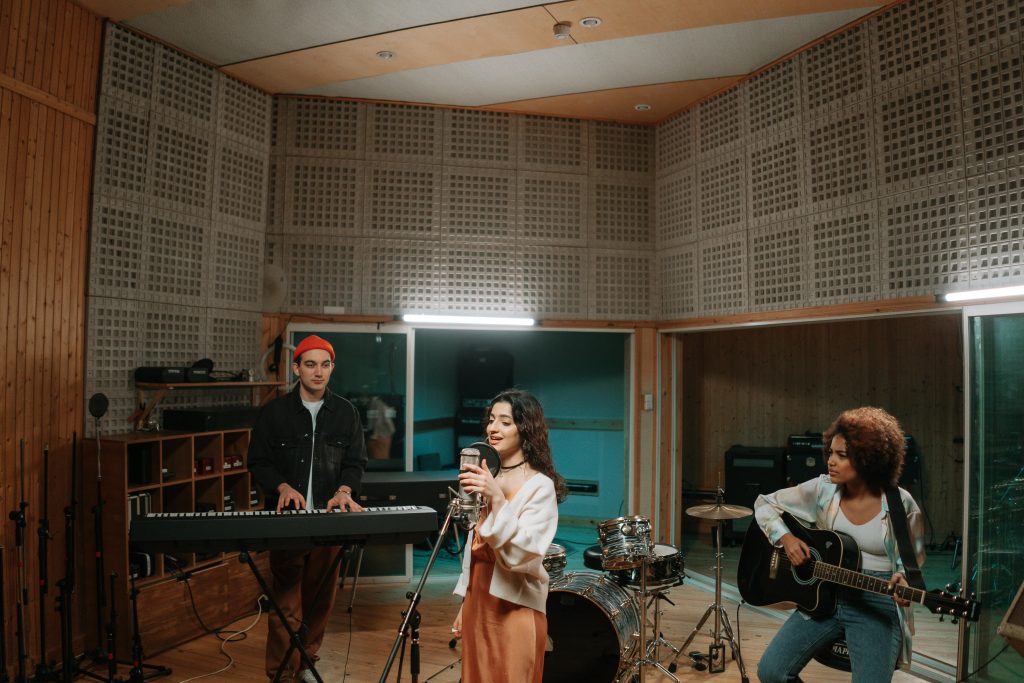
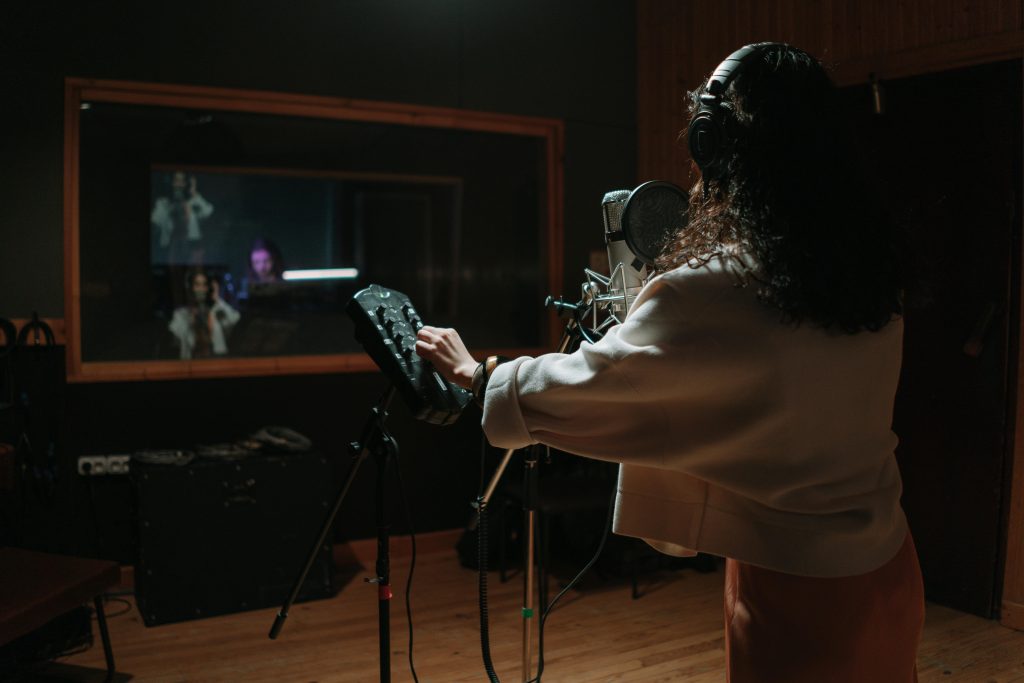
A studio needs two things: isolation, so outside noise stays out and sound stays in, and room acoustics, so what you hear in the room is accurate. These are the targets we usually design to.
| Element | Typical design target | How we get there |
|---|---|---|
| Walls between live room, booth and control room | STC 55 to 60 or more | Room within a room: independent studs, mineral wool, two damped boards |
| Studio doors | STC 45 to 50 per door set; two doors in series for more | Acoustic doors with full seals, or a sound lock lobby |
| Background noise in the room | About NC 20 to 25 | Lined ducts, slow air and quiet units placed away from the room |
| Control room acoustics | Short, even reverberation and controlled early reflections | Broadband panels, bass traps in corners, diffusion at the rear |
| Vocal booth | Dry and even, without a boxy sound | Broadband absorption on most surfaces, not thin foam alone |
Figures are typical laboratory ratings used as design targets. Ratings measured in a finished building are usually about 5 points below the laboratory figure, and can be 10 or more below where flanking paths are not controlled, so we design with a margin. STC and Rw are speech-weighted; for traffic, generator or cinema bass, also ask for Rw + Ctr or the 63 and 125 Hz test data.
Recent studio work includes the music studio for the Punjab Council of the Arts and the music studio at Beaconhouse National University; see the case studies.
Isolation is built once and is hard to change later, so walls, doors and the ceiling come first. Air conditioning is next, because a noisy unit can spoil a well-isolated room. Room treatment follows and can be fine-tuned after the first recordings. Thin foam alone is the most common false saving we see.
Call or WhatsApp +92 300 8467101 for a free phone consultation, then request a site survey for a design and BOQ.
Sound Krafted · Main Jinnah Park, Harbanspura, Lahore 54850 · Mon to Sat, 9 AM to 5 PM · info@soundkrafted.com
Find answers to common questions about our soundproofing and acoustic solutions.
Build for isolation first: heavy, decoupled walls and ceiling, a floating floor where needed, sealed acoustic doors and silenced ventilation. Then treat the inside with absorbers, bass traps and diffusion. Foam on the walls of an ordinary room does not soundproof it.
Yes, within limits. A room-within-a-room built on resilient fixings gives good isolation in most houses. Upper-floor flats are harder because of the slab and neighbours below. The survey tells you what level of isolation is realistic.
A podcast room handles speech at moderate levels, so it needs a quiet, dead-sounding room and good isolation from outside noise. A music studio must contain loud instruments and bass, so the isolation and bass control are much heavier.
Yes. We have supplied and installed studio and broadcast equipment for universities and media clients, so the room and the equipment can be delivered as one project.
We locate the source, isolate it where possible, upgrade the weakest wall, door or window on the path, and check that ducts and cable routes are sealed. Hum from the electrical system is handled with clean power and proper earthing.
Yes. Our studio projects include Sargodha, Narowal and Peshawar, as well as Lahore.
Professional Soundproofing & Acoustic Solutions for Government Institutions and Leading Corporations.
Copyright © 2026 Sound Krafted. A project of Media K Solutions (Pvt) Ltd. All rights reserved.
Pakistan
WhatsApp us: free consultation