
















Transform noisy meeting spaces into focused, professional environments with expert conference room soundproofing solutions.
Acoustic panels absorb sound inside a room, so they cut echo and make speech and music clearer. They do not block noise passing through walls. Sound Krafted supplies and installs fabric, timber slat, polyester and foam panels, ceiling clouds and baffles for offices, halls, studios and classrooms in Lahore, Islamabad and across Pakistan.
Choosing a panel is easier once you know what each type does well. This page compares the main types, explains where each one fits, and shows how we decide how many panels a room needs. It also covers the question we hear most often: why panels alone do not soundproof a room.
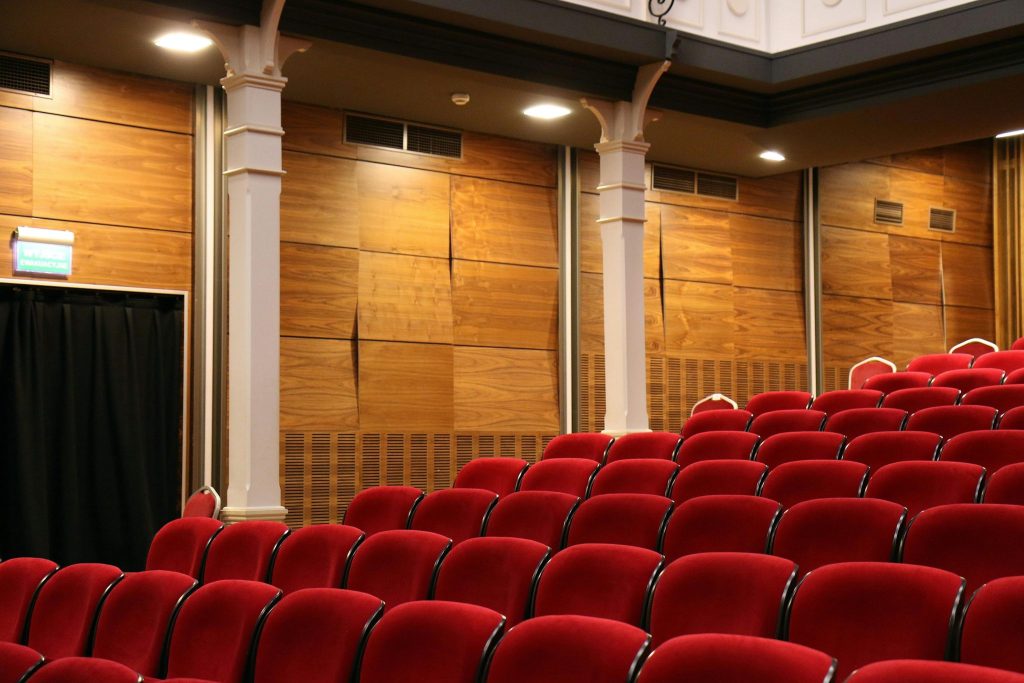
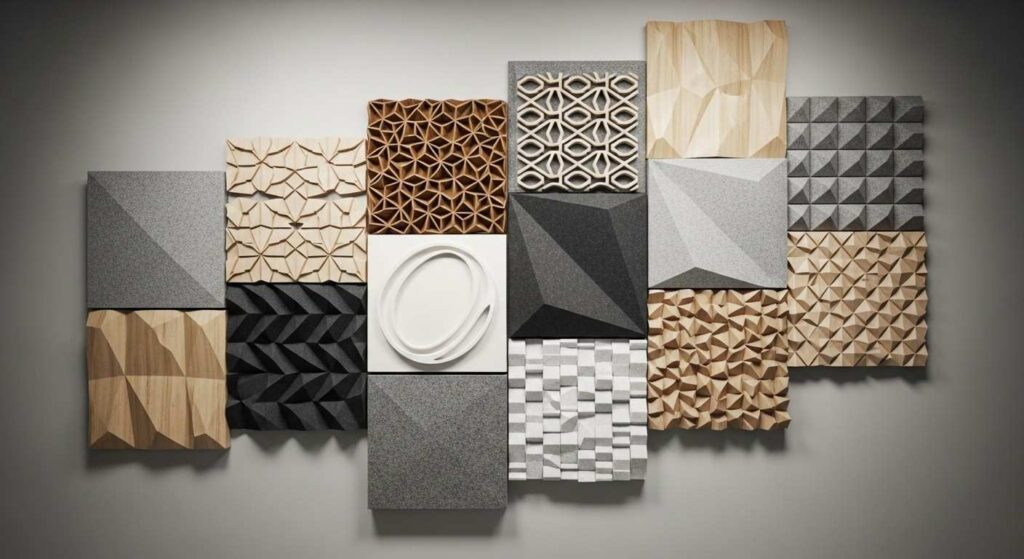
| Type | Best for | Look | Notes |
|---|---|---|---|
| Fabric-wrapped panels (mineral wool or glass wool core) | Offices, meeting rooms, halls, classrooms | Clean, wide colour choice | Broad absorption; fire performance depends on core and fabric |
| Timber slat panels | Boardrooms, lobbies, auditoriums, executive offices | Warm, architectural | Slats over an absorbent backing; the backing does most of the work |
| Polyester (PET) panels | Schools, offices, studios, high-traffic walls | Pressed felt, many colours, can be cut into shapes | Durable and light; good for areas people touch |
| Acoustic foam | Small studios, vocal booths, podcast rooms | Studio look, wedges or pyramids | Mainly absorbs mid and high frequencies; check fire rating before use in public buildings |
| Ceiling clouds and baffles | Open offices, halls with high or exposed ceilings | Suspended, flat or vertical | Treat the ceiling without losing wall space |
| Fluted and perforated panels | Auditoriums and multi-purpose halls | Grooved or perforated timber look | Combine a decorative finish with absorption behind |
| Diffusers | Studios, performance halls | Timber blocks or wells at different depths | Scatter sound rather than absorb it, so the room stays lively but even |
Thin foam is affordable and easy to fit, which is why many small home studios start there. It mostly absorbs higher frequencies, so a room treated only with foam can still sound boomy. Fabric-wrapped and polyester panels absorb a wider range, last longer and look more finished. For halls, offices and any public building, fire performance matters as much as sound, so we specify materials with the fire data the building needs.
Panels control how sound behaves inside a room. Soundproofing stops sound passing through walls, ceilings, floors and doors. If the problem is a neighbour, a generator or a meeting being overheard, you need soundproofing for walls, ceilings and rooms, and often soundproof doors and flooring. If the problem is echo, unclear speech or a boomy sound, panels are the right tool. Many rooms need both.
We use the figures from each manufacturer's test data in the BOQ, so you can see what you are buying.
There is no fixed ratio. The amount depends on the room volume, the hard surfaces already there, and the use of the room. A boardroom for speech and video calls needs a short reverberation time; a music room needs a balanced one; a prayer hall needs speech clarity without losing its character. We calculate the treatment area from the room's dimensions and finishes against a target reverberation time (ISO 3382), then place panels where reflections cause the most trouble: usually the ceiling, the rear wall and the first reflection points on side walls.
We do not publish panel price lists, because the same panel can be priced very differently once size, finish, fire data and installation are counted. These are the factors that decide a quotation:
| Factor | What changes the cost | How to keep it in budget |
|---|---|---|
| Area to treat | Square metres of wall and ceiling | Calculate the area against a target reverberation time instead of covering every wall |
| Panel type and core | Fabric over mineral wool, PET felt, timber slat, foam, perforated or fluted timber | Use high-performance panels where they matter and simpler ones elsewhere |
| Thickness | Thicker panels absorb lower frequencies | Use thicker panels or air gaps only where bass is a problem |
| Finish | Fabric range, timber veneer, printed graphics, custom shapes | Choose standard sizes and colours for large areas |
| Fire performance | Classified cores and fabrics for public buildings | State the required classification in the BOQ so all bidders price the same |
| Installation height and access | Scaffolding, high ceilings, working hours | Group high-level work; schedule out of hours only where needed |
| Fixing method | Direct fixing, framed systems, suspended clouds and baffles | Reversible fixings in heritage or rented buildings |
| Quantity and repetition | Many identical panels cost less per unit than one-off shapes | Standardise panel sizes across rooms |
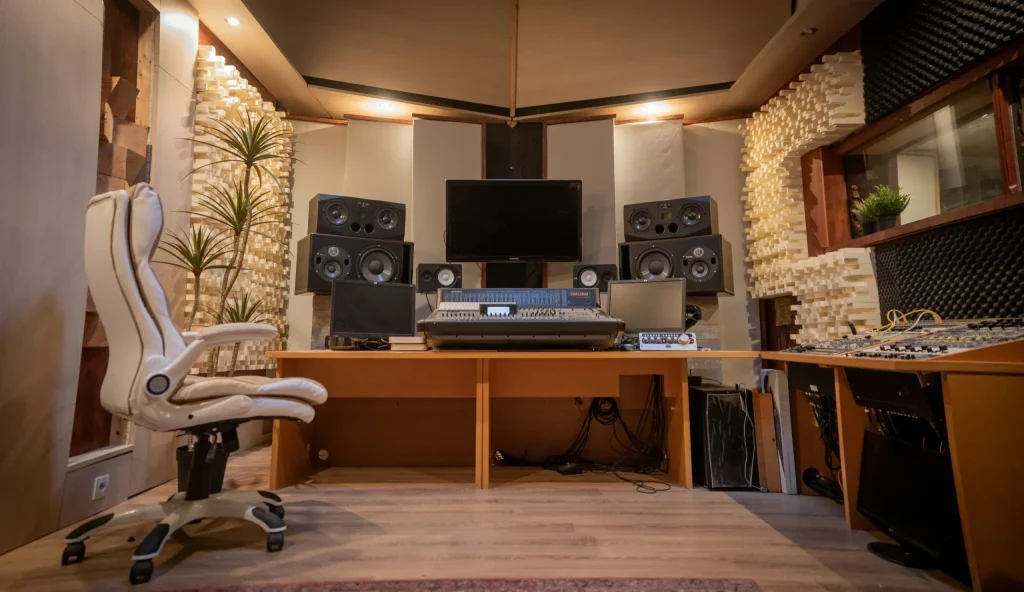
Spread panels across surfaces rather than grouping them in one place. Even coverage gives a more natural sound.
Halls, schools, offices and government buildings need acoustic materials that behave safely in a fire. Ask for the fire classification of the core and the facing, tested to a recognised standard such as EN 13501-1 or ASTM E84, and keep the test reports with the handover file. Foam and some fabrics can fail these requirements, so they should never be chosen on price alone.
| Room | Usual panel choice |
|---|---|
| Boardroom and meeting room | Fabric or timber slat on walls, acoustic ceiling |
| Open-plan office | Ceiling clouds or baffles, PET desk screens and wall panels |
| Classroom and lecture hall | Acoustic ceiling, rear-wall panels, durable PET at low level |
| Auditorium | Fluted or perforated timber, fabric panels, rear-wall absorption, diffusers |
| Recording or podcast studio | Broadband panels, bass traps, diffusers |
| Masjid prayer hall | Panels on parts of the walls, rear wall and around the dome, in finishes that suit the design |
Acoustic room checklist: what to check before you ask for panel quotes. Download the checklist.
Call or WhatsApp +92 300 8467101 for a free phone consultation, then book a paid site survey for a design and BOQ. Request a site survey or BOQ review.
Sound Krafted · Main Jinnah Park, Harbanspura, Lahore 54850 · Mon to Sat, 9 AM to 5 PM · info@soundkrafted.com
Find answers to common questions about our soundproofing and acoustic solutions.
Fabric-wrapped or polyester panels on the walls, with acoustic ceiling tiles or clouds overhead, suit most offices. They absorb speech frequencies well, come in many colours and are durable. Timber slat panels work where a more architectural finish is wanted.
No. They reduce echo inside the room but do not stop sound travelling through walls, doors or ceilings. For that you need soundproofing: mass, airtight seals and decoupled construction. We often combine the two in one project.
For a small home studio or vocal booth, foam can help. For offices, halls and public buildings, broadband panels with suitable fire performance are the better choice, because foam mostly absorbs higher frequencies and some foams do not meet fire requirements.
Yes. We use surface-mounted frames and reversible fixings, so panels can be removed later without damaging the original finishes.
The main factors are the area to be treated, panel type and finish, fire performance, installation height and access, and quantity. We quote from a BOQ after a survey, so every line is priced to the room. We do not publish standard price lists, because rooms differ too much.
Both. We can supply to your contractor with a layout, or supply and install with our own team. Installation by our team means placement follows the acoustic design.
Usually on the ceiling first, then the rear wall and the first reflection points on the side walls. In small rooms, add thicker panels in the corners for bass. A calculation sets the total area, and placement decides how well it works.
Many are, but not all. For public buildings, choose panels whose core and facing have a fire classification from a recognised test, such as EN 13501-1 or ASTM E84, and keep the reports on file. We state the required classification in the BOQ.
Yes. Fabric panels can be printed with images or brand graphics, and PET panels can be cut into shapes. Printing does not stop a fabric panel absorbing sound if an acoustically transparent fabric is used.
Professional Soundproofing & Acoustic Solutions for Government Institutions and Leading Corporations.
Copyright © 2026 Sound Krafted. A project of Media K Solutions (Pvt) Ltd. All rights reserved.
Pakistan
WhatsApp us: free consultation