
Noise can be a problem in almost any space. Traffic outside your home, conversations coming through an office wall, noise from a neighboring room, or machinery running in an industrial facility can all make a space difficult to use. But there is no single soundproofing solution that works for every situation. A bedroom affected by outside traffic needs a different approach from a conference room where people struggle to hear each other. Similarly, a recording studio has very different acoustic requirements from a restaurant or factory.
This is why effective soundproofing in Pakistan starts with understanding the actual noise problem before choosing materials or products. If you are dealing with traffic noise at home, conversations in an office, or machinery in an industrial space, the solution starts with identifying the actual source of the problem.
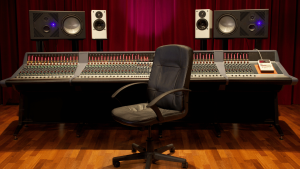
What Does Soundproofing Actually Do?
Soundproofing uses different methods and materials to reduce the amount of sound moving from one area to another.
Sound can travel through walls, ceilings, floors, doors, windows, ventilation systems, and even small gaps or connections in a building. This means that treating just one surface may not always solve the problem.
The first step is to find out where the noise is coming from and how it is getting into the room. Once that is clear, the right solution can be chosen for the space.
It is also important to understand the difference between soundproofing and acoustic treatment.
Soundproofing is mainly used to reduce sound travelling between spaces. Acoustic treatment, on the other hand, helps control echo and sound reflections inside a room.
For example, if traffic noise is coming into a bedroom through a window, putting an acoustic panel on the opposite wall may reduce some echo inside the room, but it will not stop the traffic noise from entering. The window and the way the sound is getting through it need to be addressed.
The U.S. Environmental Protection Agency also explains the difference between sound absorption and sound insulation, which shows why choosing the right material depends on the type of noise problem.
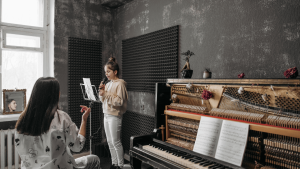
Why Professional Soundproofing Matters?
Constant unwanted noise can make everyday spaces uncomfortable. In a workplace, background conversations can make concentration difficult. At home, traffic or neighboring noise can interfere with relaxation and sleep. In a studio, external noise can affect recordings.
The World Health Organization recognizes environmental noise as an important public-health concern and identifies effects associated with excessive noise exposure, including disturbance to sleep and performance. World Health Organization – Environmental Noise
Good acoustic design can therefore contribute to a more comfortable and productive environment.
Some common benefits include:
- Lower levels of unwanted background noise
- Better speech intelligibility
- Greater privacy
- Reduced echo
- Improved recording conditions
- Better concentration
- More comfortable meeting spaces
- Improved entertainment experiences
- Better acoustic performance in commercial environments
The objective is not always to create complete silence. In most buildings, the goal is to reduce unwanted sound to a practical and comfortable level.

Soundproofing & Acoustic Treatment: What Is The Difference?
People often use the terms soundproofing and acoustic treatment interchangeably, but they are used for different purposes. Soundproofing helps reduce sound travelling from one space to another, while acoustic treatment helps control sound inside a room.
Soundproofing
Soundproofing focuses on reducing sound transmission between spaces. Depending on the type of building and the source of the noise, it may involve:
- Acoustic insulation
- Wall construction
- Ceiling systems
- Soundproof doors
- Window treatments
- Floor isolation
- Sealing gaps
- Sound barriers
- Vibration control
The right combination depends on where the sound is coming from and how it is travelling through the building.
Acoustic Treatment
Acoustic treatment is used to control sound inside a room. It can help reduce unwanted reflections and echo and make speech, music, or other sounds clearer.
Common acoustic treatments include:
- Acoustic wall panels
- Ceiling absorbers
- Acoustic baffles
- Bass traps
- Diffusers
- Sound-absorbing materials
A space can need both soundproofing and acoustic treatment. For example, a recording studio may need soundproofing to reduce outside noise while also using acoustic treatment to control reflections inside the room.
A conference room may not need extensive soundproofing if the main issue is echo or unclear conversations. In that case, acoustic treatment may be more appropriate.
Understanding the difference can help homeowners and businesses choose the right solution instead of spending money on a product that does not address the actual problem.
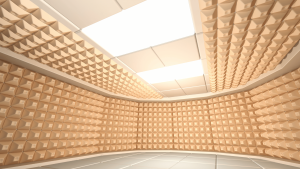
Soundproofing Solutions For Different Spaces
Every space has different sound-related needs. The right solution depends on the type of noise, where it is coming from, and how the space is used.
Home Soundproofing
Homes can be affected by traffic, construction, neighbors, footsteps, music, and other everyday sounds. Soundproofing may focus on walls, ceilings, doors, windows, floors, or shared walls, depending on where the noise is coming from. Bedrooms and home offices may also need special attention when noise affects sleep, privacy, or concentration.
The goal is not simply to add more material to a room. The solution should focus on the areas through which sound is entering or leaving the space.
Explore SoundKrafted’s home soundproofing solutions
Office & Meeting Room Acoustics
Noise can affect concentration and communication in offices, especially in open-plan workplaces and meeting rooms. Conversations travelling between spaces, echo during meetings, and poor speech clarity during presentations or video calls are common concerns.
Acoustic panels, ceiling treatments, partitions, and other acoustic solutions can help control sound inside the room. When the main concern is sound travelling between rooms or maintaining privacy, sound isolation may also be required.
SoundKrafted meeting room solutions

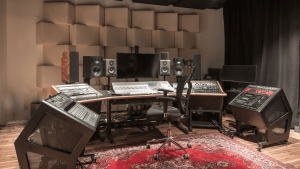
Recording Studios & Rehearsal Rooms
Recording studios and rehearsal rooms need careful attention to both sound isolation and room acoustics. Outside noise can affect recordings, while unwanted reflections inside the room can affect the sound heard by musicians and recording teams.
Depending on the space, a professional studio project may include wall and ceiling construction, treatment around doors and other openings, acoustic absorption, low-frequency control, and vibration control. The right approach depends on the size and purpose of the room.
Soundproofing a Music Rehearsal Space
Acoustic Panels For Interior Noise Control
Acoustic panels are one of the most commonly used solutions for controlling reflections inside a room. Hard surfaces such as concrete, glass, tile, and bare walls reflect sound. When too many reflections remain in a room, speech can become unclear and music may sound harsh.
Acoustic wall panels absorb a portion of these reflections and can help create a more controlled acoustic environment.
They are commonly used in:
- Offices
- Recording studios
- Classrooms
- Home theaters
- Restaurants
- Conference rooms
- Auditoriums
- Commercial buildings
SoundKrafted provides different acoustic panels and materials designed for practical acoustic applications.
SoundKrafted acoustic panels and materials
The placement of panels is important. Simply covering every wall is not necessarily the best approach. Panel thickness, material, room dimensions, ceiling height, furniture, and the desired acoustic result should all be considered.

Restaurant & Cafe Acoustic Solutions
Restaurants and cafes can become noisy when conversations, kitchen activity, and other sounds build up. Hard surfaces can reflect sound and increase echo, making it difficult for customers to hear each other.
Acoustic treatment can help control these reflections and create a more comfortable environment without making the space completely silent.
Soundproofing For Schools & Educational Facilities
Excessive noise and echo can make it harder for students to understand speech in classrooms and other educational spaces. Acoustic treatment can improve speech clarity and make communication easier.
Sound isolation may also be needed when noise comes from nearby classrooms, corridors, roads, or mechanical equipment.
SoundKrafted acoustic solutions
Industrial Noise Control
Factories, workshops, generators, compressors, and other machinery can produce high levels of noise. Industrial noise control may require different solutions depending on the equipment and the way the noise travels.
Common approaches include equipment enclosures, acoustic barriers, vibration control, acoustic materials, and isolation systems. The noise source and transmission path should be assessed before selecting the most suitable solution.
How To Select The Right Soundproofing Materials?
Choosing a material simply because it is labelled “soundproof” is not enough. Different materials and systems perform different functions. The right choice depends on the construction of the space, the type of noise, and the result you are trying to achieve. Before selecting materials, consider these five points:
1. Identify The Noise Source
First determine where the noise is coming from. Is it traffic, a neighboring room, machinery, footsteps, or something else?
2. Find The Transmission Path
Sound can travel through walls, ceilings, floors, doors, windows, gaps, and other parts of a structure.
Treating only one surface may not solve the problem if sound is finding another path into the room.
3. Define Your Goal
Do you want to reduce outside noise? Improve privacy? Control echo? Improve recording quality?
The answer affects the type of solution required.
4. Consider The Existing Structure
A solution that works well in a new building may not be practical for an existing room. The wall construction, available space, doors, windows, and other structural factors all matter.
5. Choose The Solution For The Application
There is no universal “best” soundproofing material. A material that is useful for controlling reflections inside a studio may not be the right choice for stopping traffic noise from entering a bedroom.
Why Customized Soundproofing Is More Effective
There is no single soundproofing solution that works for every building. Two rooms of the same size can still have different noise problems because of their walls, windows, doors, furniture, and surroundings. A professional acoustic assessment can help identify where the sound is coming from and which areas need treatment.
SoundKrafted provides customized acoustic and soundproofing solutions for different residential and commercial spaces. Instead of buying random materials and hoping they work, property owners can choose a solution based on the actual needs of their space.
Common Soundproofing Mistakes To Avoid
Several common mistakes can reduce the effectiveness of a soundproofing project.
Using Only Acoustic Foam
Acoustic foam can help control sound reflections inside a room, but it is not a complete soundproofing solution. It should be chosen based on the specific acoustic problem.
Ignoring Doors and Windows
Small gaps around doors and windows can become important paths for sound to travel through. These areas should be considered when planning a soundproofing solution.
Treating Only One Surface
Noise can travel through multiple parts of a building. Treating only one wall may not solve the problem if sound is also entering through the ceiling, floor, doors, or other areas.
Choosing Materials Only by Price
The cheapest material is not always the most suitable option. Its performance and suitability for the specific application should be considered along with cost.
Applying the Same Solution Everywhere
A home bedroom and an industrial facility have very different acoustic requirements. Each project should be assessed based on the type of space, the source of the noise, and the desired result.
What Should You Expect From A Professional Soundproofing Project?
A professional soundproofing project should begin by understanding the specific noise problem and the requirements of the space.
The process may include:
- Identifying the noise source
- Assessing the room and surrounding structure
- Finding the main sound transmission paths
- Determining the required level of sound control
- Selecting suitable materials and systems
- Designing and installing the soundproofing solution
- Evaluating the final results
A properly planned process helps ensure that the selected solution addresses the actual noise problem rather than treating only one part of the space.
Frequently Asked Questions
What is the best soundproofing solution for a home?
There is no single best solution. It depends on the noise source, building structure, room, and required level of sound isolation.
Can acoustic panels stop outside noise?
Acoustic panels mainly control sound reflections inside a room. They can improve room acoustics but are not a complete solution for blocking outside noise.
Is home soundproofing expensive?
The cost depends on the room size, materials, construction requirements, noise source, and level of isolation needed.
Can I soundproof an existing room?
Yes. Existing rooms can often be improved with suitable solutions for walls, ceilings, floors, doors, windows, and insulation.
What is the difference between sound absorption and sound isolation?
Sound absorption reduces sound reflections inside a room, while sound isolation reduces sound transmission between spaces.
Are soundproofing solutions useful for offices?
Yes. They can help reduce distractions, improve communication, support privacy, and create a more comfortable workspace.
Final Thoughts
Good soundproofing in Pakistan is not about covering a room with as many acoustic products as possible. It starts with understanding the noise problem and choosing a solution that matches the space. A bedroom dealing with traffic noise, an office that needs better speech privacy, and a factory dealing with machinery noise will all require different approaches.
If you’re planning a soundproofing or acoustic project, understanding the problem first can help you avoid unnecessary costs and choose a solution that actually fits your space.
Need help with your space? Explore Sound Krafted’s soundproofing and acoustic solutions.
Recommended Internal Links
Use these naturally within the article rather than placing all of them together:
- Home Soundproofing → Soundproofing for Home
- Acoustic Panels & Materials → Acoustic Panels & Materials
- Meeting Room Solutions → Meeting Rooms Solution
- Soundproofing Solutions → Our Solutions
- Music Rehearsal Space → Soundproofing a Music Rehearsal Space
- Restaurant & Cafe Soundproofing → Restaurant and Cafe Solution
Recommended External Links
For authority and informational value, use:
- World Health Organization – Environmental Noise
- WHO Environmental Noise Guidelines
- U.S. Environmental Protection Agency – Noise Control Guidance