
Noise is an unavoidable part of modern life. Traffic outside your home, conversations in neighboring rooms, office discussions, machinery, construction work, music, and other everyday sounds can affect the comfort and functionality of any space. When unwanted noise becomes a regular problem, professionally planned soundproofing solutions in Pakistan can make a significant difference.
Soundproofing is not limited to recording studios or cinemas. Today, homeowners, businesses, restaurants, offices, educational institutions, and industrial facilities are increasingly looking for practical ways to control unwanted sound.
However, effective noise control requires more than simply placing acoustic foam on a wall. Every room has different construction materials, noise sources, and acoustic requirements. A solution that works well in a recording studio may not be appropriate for a bedroom, conference room, restaurant, or industrial facility.
This guide explains how modern soundproofing solutions work, where they can be used, and why professional acoustic planning is important.
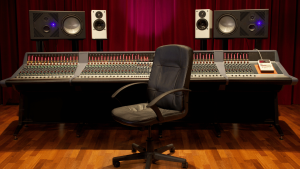
What Does Soundproofing Actually Do?
Soundproofing refers to techniques and materials used to reduce the amount of sound travelling from one area to another.
Sound can move through walls, ceilings, floors, doors, windows, ventilation systems, and even structural connections. Because of this, treating only one visible surface may not solve the actual problem.
A proper soundproofing strategy identifies the source of the noise and determines how it is reaching the room. The solution can then be designed around the building and its specific requirements.
This is different from acoustic treatment.
Soundproofing focuses mainly on limiting sound transmission, while acoustic treatment is used to manage sound reflections and reverberation inside a room.
For example, if traffic noise is entering a bedroom through a window, adding a decorative acoustic panel to the opposite wall may improve the room’s internal acoustics but will not necessarily stop the traffic noise. A sound-isolation strategy would need to address the actual transmission path.
The U.S. Environmental Protection Agency also explains the distinction between sound absorption and sound insulation, making it important to select materials according to the acoustic problem being addressed. EPA guidance on noise control
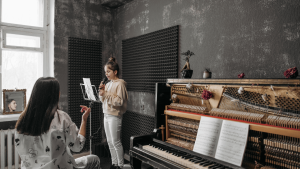
Why Noise Control Matters
Constant unwanted noise can make everyday spaces uncomfortable. In a workplace, background conversations can make concentration difficult. At home, traffic or neighboring noise can interfere with relaxation and sleep. In a studio, external noise can affect recordings.
The World Health Organization recognizes environmental noise as an important public-health concern and identifies effects associated with excessive noise exposure, including disturbance to sleep and performance. World Health Organization – Environmental Noise
Good acoustic design can therefore contribute to a more comfortable and productive environment.
Some common benefits include:
- Lower levels of unwanted background noise
- Better speech intelligibility
- Greater privacy
- Reduced echo
- Improved recording conditions
- Better concentration
- More comfortable meeting spaces
- Improved entertainment experiences
- Better acoustic performance in commercial environments
The objective is not always to create complete silence. In most buildings, the goal is to reduce unwanted sound to a practical and comfortable level.
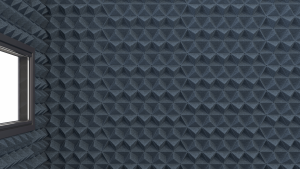
Soundproofing and Acoustic Treatment: What Is the Difference?
Many people use the terms soundproofing and acoustic treatment interchangeably, but they address different problems.
Soundproofing
Soundproofing is concerned with reducing sound transmission between spaces.
Depending on the project, it can involve:
- Acoustic insulation
- Wall construction
- Ceiling systems
- Soundproof doors
- Window treatments
- Floor isolation
- Sealing gaps
- Sound barriers
- Vibration control
Acoustic Treatment
Acoustic treatment controls the way sound behaves inside a room.
Common acoustic products include:
- Acoustic wall panels
- Ceiling absorbers
- Acoustic baffles
- Bass traps
- Diffusers
- Sound-absorbing materials
A room can therefore require both sound isolation and acoustic treatment.
For example, a recording studio may need to prevent outside noise from entering while also controlling internal reflections. A conference room may primarily require acoustic treatment to make conversations easier to understand.
Understanding this difference can prevent businesses and homeowners from investing in the wrong solution.
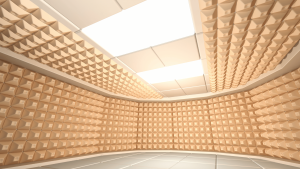
Home Soundproofing Solutions
Your home should provide a comfortable environment for sleeping, working, relaxing, and spending time with family. Unfortunately, residential properties can be affected by many types of unwanted noise.
Common examples include:
- Road traffic
- Construction
- Loud neighbors
- Television and music
- Footsteps
- Doors closing
- Household appliances
- Outdoor activity
- Noise from adjacent rooms
Home soundproofing can be designed according to the source of the disturbance.
For residential projects, SoundKrafted provides acoustic solutions for different areas of the home. Their approach can include acoustic materials, insulation, door treatments, flooring solutions, and other measures depending on the structure and requirements of the room.
Explore SoundKrafted’s home soundproofing solutions
Bedrooms, home offices, entertainment rooms, and living areas may all require different approaches.
For instance, someone working remotely may be more concerned with reducing background noise during meetings, while a homeowner living near a busy road may need greater attention to windows and external sound transmission.
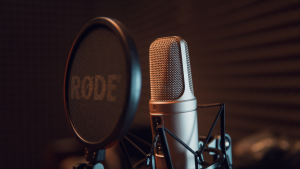
Creating a Quieter and More Productive Office
Office environments can become noisy very quickly.
Open-plan layouts, phone calls, meetings, employee conversations, printers, air-conditioning systems, and movement can all contribute to background noise.
While collaboration is important, excessive noise can make it harder for employees to focus and communicate effectively.
Professional office soundproofing and acoustic treatment can help businesses create more comfortable working environments.
Useful applications include:
- Conference rooms
- Executive offices
- Open-plan workspaces
- Private meeting rooms
- Interview rooms
- Call centers
- Home offices
- Video-conferencing spaces
Conference rooms, for example, benefit from controlling sound reflections so that people can hear one another more clearly. Acoustic wall panels, ceiling treatments, flooring solutions, door seals, and other acoustic elements can be combined according to the room’s requirements.
SoundKrafted meeting room solutions
A well-designed acoustic environment can also help improve privacy when confidential discussions take place.
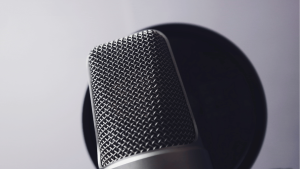
Recording Studio Soundproofing
Recording studios require careful acoustic planning because even relatively small amounts of unwanted noise can affect professional recordings.
The challenge is usually twofold:
- Prevent unwanted external sound from entering.
- Control reflections and frequencies inside the studio.
This means recording studio soundproofing often requires a combination of isolation and acoustic treatment.
Important areas may include:
- Walls
- Floors
- Ceilings
- Doors
- Windows
- Ventilation
- Low-frequency control
- Equipment vibration
A recording room should not simply be made as reflective or absorbent as possible. The acoustic environment needs to be balanced according to the purpose of the room.
SoundKrafted offers acoustic and soundproofing solutions for studios and other specialized environments.
SoundKrafted professional soundproofing solutions
For rehearsal rooms, acoustic treatment can also help musicians hear themselves and other performers more clearly.
Soundproofing a Music Rehearsal Space
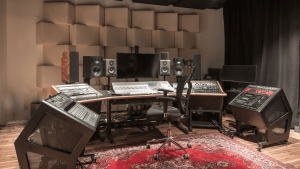
Acoustic Panels for Interior Noise Control
Acoustic panels are one of the most commonly used solutions for controlling reflections inside a room.
Hard surfaces such as concrete, glass, tile, and bare walls reflect sound. When too many reflections remain in a room, speech can become unclear and music may sound harsh.
Acoustic wall panels absorb a portion of these reflections and can help create a more controlled acoustic environment.
They are commonly used in:
- Offices
- Recording studios
- Classrooms
- Home theaters
- Restaurants
- Conference rooms
- Auditoriums
- Commercial buildings
SoundKrafted provides different acoustic panels and materials designed for practical acoustic applications.
SoundKrafted acoustic panels and materials
The placement of panels is important. Simply covering every wall is not necessarily the best approach. Panel thickness, material, room dimensions, ceiling height, furniture, and the desired acoustic result should all be considered.

Restaurant and Cafe Acoustic Solutions
Restaurants and cafes need to balance atmosphere with comfort.
A lively environment can be attractive, but excessive background noise can make conversations difficult. Customers may struggle to hear each other when multiple conversations, kitchen sounds, music, and equipment are competing within the same space.
Restaurant soundproofing and acoustic treatment can help manage these issues.
Potential solutions include:
- Acoustic wall panels
- Ceiling treatment
- Sound-absorbing materials
- Noise barriers
- Door and window treatments
- Strategic acoustic design
SoundKrafted provides acoustic solutions specifically for restaurants and cafes.
SoundKrafted restaurant and cafe soundproofing solutions
The objective is to create an environment where customers can enjoy conversations without eliminating the natural atmosphere of the venue.
Soundproofing for Schools and Educational Facilities
Good communication is essential in classrooms, lecture halls, training centers, and educational facilities.
If a teacher’s voice is reflected repeatedly around a room, students at the back may find it difficult to understand what is being said. External noise can create an additional distraction.
Acoustic treatment can help reduce excessive reverberation and improve speech clarity.
Educational environments may benefit from:
- Acoustic wall panels
- Ceiling absorbers
- Soundproof doors
- Acoustic insulation
- Noise-control systems
- Room-specific acoustic planning
SoundKrafted lists educational spaces among its acoustic and soundproofing applications.
SoundKrafted acoustic solutions
Industrial Noise Control
Industrial facilities often face more complex noise challenges than residential properties.
Machinery, generators, compressors, ventilation equipment, production lines, and mechanical systems can create continuous or high-intensity noise.
In such environments, industrial noise control may require specialized measures such as:
- Acoustic barriers
- Equipment enclosures
- Vibration isolation
- Acoustic insulation
- Sound-absorbing surfaces
- Mechanical noise control
The right solution depends heavily on the equipment, building structure, frequency of the noise, and transmission route.
For this reason, industrial projects should be assessed individually instead of relying on generic acoustic products.
How to Select the Right Soundproofing Materials
Choosing the right soundproofing materials is one of the most important parts of an acoustic project.
Before selecting a product, consider the following factors.
Identify the Noise Source
First determine what is creating the problem.
Is the noise coming from traffic, another room, machinery, music, footsteps, or an HVAC system?
Find the Transmission Path
Sound can travel through several routes. Walls may not be the only problem. Doors, windows, floors, ceilings, and structural connections can also transmit sound.
Understand the Room’s Purpose
A bedroom, cinema, office, restaurant, and recording studio have completely different acoustic requirements.
Decide Your Acoustic Goal
Do you want to:
- Block external noise?
- Reduce echo?
- Improve speech clarity?
- Increase privacy?
- Control bass?
- Improve recording quality?
The answer will determine which solutions are most suitable.
Consider Appearance
Modern acoustic products do not have to compromise interior design. Acoustic panels can be selected and positioned to complement the overall appearance of a space.
Why Customized Soundproofing Is More Effective
There is no universal soundproofing solution that works perfectly for every building.
Two rooms with the same dimensions can still have completely different acoustic problems because of their construction, furniture, windows, doors, and surrounding environment.
A professional acoustic assessment can identify the major transmission paths and determine where treatment will provide the greatest benefit.
SoundKrafted focuses on customized acoustic and soundproofing solutions for different residential and commercial applications.
SoundKrafted – Acoustic & Soundproofing Solutions
Instead of purchasing random materials and hoping they work, property owners can benefit from a solution based on the actual requirements of the space.
Common Mistakes to Avoid
Several mistakes can reduce the effectiveness of a soundproofing project.
Using Only Acoustic Foam
Acoustic foam can help with internal reflections, but it should not automatically be considered a complete soundproofing system.
Ignoring Doors and Windows
Small gaps around doors and windows can become important sound transmission paths.
Treating Only One Surface
Noise can travel through multiple building elements. Treating one wall may not solve a problem if the sound is entering through the ceiling or floor.
Choosing Materials Only by Price
The cheapest material is not always the most suitable option. Performance and application should be considered alongside cost.
Applying the Same Solution Everywhere
A home bedroom and industrial facility do not have the same acoustic requirements. Every project should be evaluated individually.
What Should You Expect From a Professional Soundproofing Project?
A professional project should begin with understanding the client’s actual problem.
The process may involve:
- Identifying the source of unwanted noise.
- Examining the room and surrounding structure.
- Determining possible transmission paths.
- Defining the required acoustic performance.
- Selecting appropriate materials.
- Designing the acoustic system.
- Installing the selected solutions.
- Evaluating the final acoustic environment.
This structured approach is more reliable than simply purchasing products without understanding how they will perform within the building.
Frequently Asked Questions
What is the best soundproofing solution for a home?
There is no single best solution for every home. The correct approach depends on the noise source, building structure, room size, and desired level of sound isolation.
Can acoustic panels stop outside noise?
Acoustic panels are primarily designed to control sound reflections inside a room. They can improve room acoustics but should not automatically be treated as a complete solution for external noise.
Is home soundproofing expensive?
The cost varies according to the size of the room, materials, construction requirements, noise source, and level of isolation required. A professional assessment can provide a more accurate project estimate.
Can I soundproof an existing room?
Yes. Existing rooms can often be improved using appropriate wall, ceiling, floor, door, window, insulation, and acoustic treatment solutions.
What is the difference between sound absorption and sound isolation?
Sound absorption reduces reflections within a room, while sound isolation aims to reduce sound transmission from one space to another.
Are soundproofing solutions useful for offices?
Yes. Proper acoustic planning can reduce distractions, improve communication, support privacy, and create more comfortable workspaces.
Final Thoughts
Effective soundproofing in Pakistan is not about adding as many acoustic products as possible. It is about understanding the behavior of sound and applying the right solution to the right location.
Whether you are dealing with traffic noise at home, distracting conversations in an office, unwanted sound in a recording studio, excessive reverberation in a restaurant, or machinery noise in an industrial facility, professional acoustic planning can help address the problem more effectively.
From home soundproofing and office acoustic treatment to recording studio isolation, acoustic wall panels, commercial noise control, and industrial soundproofing, the right system depends on the unique requirements of each space.
SoundKrafted provides customized acoustic and soundproofing solutions for a variety of environments. If unwanted noise or poor room acoustics is affecting your space, professional assessment can help you identify the most appropriate solution.
Visit SoundKrafted for professional soundproofing solutions
Recommended Internal Links
Use these naturally within the article rather than placing all of them together:
- Home Soundproofing → Soundproofing for Home
- Acoustic Panels & Materials → Acoustic Panels & Materials
- Meeting Room Solutions → Meeting Rooms Solution
- Soundproofing Solutions → Our Solutions
- Music Rehearsal Space → Soundproofing a Music Rehearsal Space
- Restaurant & Cafe Soundproofing → Restaurant and Cafe Solution
Recommended External Links
For authority and informational value, use:
- World Health Organization – Environmental Noise
- WHO Environmental Noise Guidelines
- U.S. Environmental Protection Agency – Noise Control Guidance