
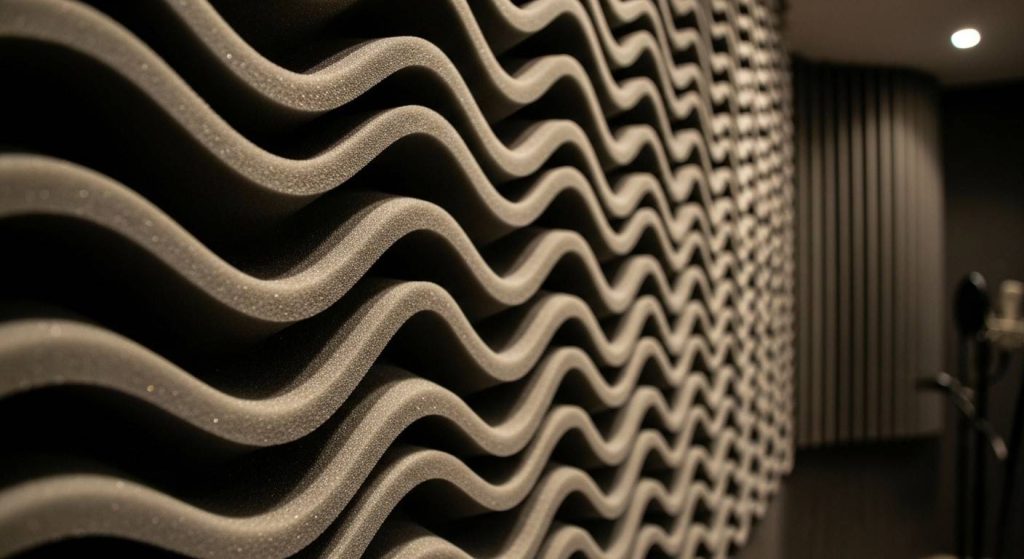
Commercial noise challenges cost businesses thousands annually through reduced productivity, regulatory violations, and operational disruptions. Manufacturing facilities battle equipment noise exceeding safe exposure limits. Corporate offices struggle maintaining confidential discussion privacy. Healthcare facilities require acoustic isolation protecting patient information. Fortunately, soundproof sheets deliver engineered noise control solutions transforming problematic acoustic environments into compliant, functional workspaces.
This professional guide addresses real-world noise control challenges businesses face daily. Discover which materials solve specific problems, how installations achieve measurable results, and why strategic soundproofing investments deliver rapid ROI through operational improvements.
Understanding Commercial Soundproofing Requirements
Businesses face noise control needs far exceeding basic reduction. OSHA regulations mandate workplace noise exposure below 85 decibels averaged over eight-hour shifts. Facilities exceeding these thresholds face citations, penalties, and potential liability from hearing damage claims.
Soundproof sheets provide engineered barriers meeting regulatory standards while maintaining operational efficiency. Unlike architectural modifications requiring production shutdowns, flexible barrier materials install around existing equipment and structures minimizing business disruption.
Healthcare facilities must comply with HIPAA privacy requirements extending to acoustic isolation. Patient conversations, medical consultations, and treatment discussions require complete confidentiality. Traditional walls often fail providing adequate sound isolation between examination rooms. Professional soundproofing addresses these compliance-critical gaps effectively.
Mass-Loaded Vinyl: The Industrial Standard
Mass-loaded vinyl sheets represent proven technology for demanding commercial applications. These soundproof sheets achieve Sound Transmission Class ratings between 27-32 despite measuring only 1/8 inch thick. The density-to-thickness ratio makes MLV ideal for retrofit installations where space constraints prevent traditional construction.
Industrial manufacturing environments deploy MLV sheets creating equipment enclosures that reduce noise exposure without impeding maintenance access. Removable barrier panels allow technicians servicing machinery while maintaining acoustic protection during normal operations.
Corporate facilities install MLV within partition walls separating conference rooms, executive offices, and collaborative spaces. The material blocks conversational frequencies effectively, preventing confidential business discussions from being overheard in adjacent areas.
Acoustic Barrier Blankets for Flexible Applications
Heavy-duty acoustic blankets provide portable noise control solutions for dynamic commercial environments. These multi-layer soundproof sheets suspend from ceiling-mounted track systems or freestanding frames creating instant acoustic barriers.
Construction contractors use acoustic blankets as temporary noise barriers protecting occupied buildings during renovation work. The portability allows repositioning as project phases progress without permanent installation investments.
Manufacturing facilities benefit from moveable acoustic barriers around seasonal production equipment. When operations shift between product lines, barrier configurations adjust accordingly maintaining optimal noise control regardless of equipment layout changes.
Testing laboratories employ acoustic blankets isolating measurement equipment from environmental noise contamination. The flexible barriers create controlled acoustic environments supporting accurate instrumentation readings.
Composite Barrier Systems for Maximum Performance
Advanced composite materials combine mass-loaded barriers with absorption layers addressing both transmission and reverberation simultaneously. These engineered soundproof sheets deliver superior performance in acoustically challenging environments.
Broadcast facilities require absolute isolation between studios preventing sound bleed during simultaneous programming. Composite barriers installed within wall assemblies achieve STC ratings exceeding 50, ensuring complete acoustic separation.
Data centers face unique noise control challenges from cooling systems and server equipment generating constant broadband noise. Composite soundproofing reduces acoustic energy while maintaining thermal management requirements essential for equipment reliability.
Industrial compressor rooms benefit from comprehensive barrier systems controlling both airborne noise transmission and structure-borne vibration. The multi-layer approach addresses complex acoustic problems single materials cannot solve effectively.
Strategic Installation for Measurable Results
Equipment Enclosure Design
Machinery noise control requires complete enclosure strategies. Partial barriers reduce noise in specific directions but fail achieving substantial overall reduction. Professional soundproof sheets installations create full enclosures with minimal openings.
Ventilation remains critical for enclosed equipment. Acoustic louvers incorporate soundproof baffles maintaining necessary airflow while attenuating noise transmission. This balanced approach protects both equipment and acoustic performance.
Access panels built into enclosures allow maintenance without dismantling entire barrier systems. Quick-release fasteners and hinged sections support operational efficiency while maintaining acoustic integrity during normal production.
Wall and Ceiling Integration
Shared walls between noisy and quiet areas receive priority treatment. Installing soundproof sheets as additional barrier layers over existing construction provides substantial noise reduction without space-consuming double-wall systems.
Ceiling treatments address airborne sound traveling through common plenum spaces above drop ceilings. Barrier materials suspended below structural decks prevent noise transmission between adjacent spaces sharing overhead cavities.
Perimeter sealing proves critical for barrier effectiveness. Acoustic sealant applied at wall-floor junctions, ceiling penetrations, and partition intersections prevents sound flanking around otherwise effective barriers.
Regulatory Compliance and Documentation
OSHA compliance requires documented noise exposure measurements and implemented control measures. Professional soundproof sheets installations provide measurable noise reduction verifiable through before-and-after acoustic testing.
Facilities maintaining ISO certifications often face acoustic requirements within quality management systems. Soundproofing documentation demonstrates systematic noise control supporting certification maintenance and audit processes.
Environmental permits frequently include noise emission limits protecting surrounding commercial properties. Barrier installations reduce facility noise transmission helping maintain permit compliance and avoiding violation penalties.
ROI Analysis for Commercial Soundproofing
Workplace noise exposure exceeding regulatory limits triggers mandatory hearing conservation programs. These programs cost businesses substantially through audiometric testing, hearing protection equipment, training requirements, and administrative overhead. Effective soundproofing eliminates these ongoing expenses.
Productivity research demonstrates that excessive noise reduces work output by 15-20% across various industries. Conference call clarity, concentration during complex tasks, and error rates all improve measurably in acoustically controlled environments. The productivity gains often justify soundproofing investments within 18-24 months.
Tenant complaints in multi-tenant facilities create management headaches and potential lease termination risks. Addressing noise transfer between commercial tenants protects rental income while maintaining positive landlord-tenant relationships.
Performance Verification and Quality Assurance
Professional installations include acoustic testing validating performance specifications. Sound level measurements taken before and after installation document actual noise reduction achieved. This data supports compliance documentation and ROI calculations.
Soundproof sheets performance depends entirely on installation quality. Gaps, incomplete coverage, and poor sealing undermine even premium materials. Third-party inspection services verify installation completeness ensuring specifications get met consistently.
Long-term performance monitoring identifies potential degradation from fastener loosening, sealant aging, or material damage. Scheduled inspections maintain acoustic integrity protecting initial investment value over decades of service.
Material Selection Criteria
Density and Mass Requirements
Effective sound blocking requires substantial mass. Professional-grade soundproof sheets weigh minimum one pound per square foot. Lighter materials marketed as soundproofing deliver disappointing results failing to block meaningful noise transmission.
Frequency response characteristics influence material selection. Low-frequency noise from industrial equipment requires thicker, denser barriers than mid-frequency conversational privacy applications. Matching material specifications to actual noise problems ensures cost-effective solutions.
Fire Safety and Building Codes
Commercial applications demand fire-rated materials meeting building code requirements. Class A flame-spread ratings ensure barrier materials don’t contribute to fire hazards. Professional suppliers provide comprehensive fire testing documentation supporting permit approvals.
Indoor air quality considerations prohibit materials emitting volatile organic compounds in occupied spaces. Low-VOC or zero-VOC barrier materials protect building occupant health while delivering acoustic performance.
Professional Implementation Strategy
Acoustic consultants evaluate existing conditions through comprehensive site assessments. Noise source identification, transmission path analysis, and receiver sensitivity evaluation inform effective solution design. This engineering approach delivers predictable results versus trial-and-error material application.
Installation specifications detail material requirements, mounting procedures, and quality control standards. Clear documentation ensures subcontractors execute designs correctly maintaining acoustic performance expectations throughout project execution.
Post-installation commissioning verifies completed work meets performance specifications. Professional documentation provides accountability ensuring clients receive value promised during project planning phases.
Conclusion
Commercial noise control using soundproof sheets delivers measurable business benefits through regulatory compliance, productivity enhancement, and operational quality improvements. Understanding material options, installation methodologies, and performance verification processes enables informed decisions supporting successful noise control projects. Whether addressing OSHA compliance requirements, protecting confidential communications, or improving workplace quality, engineered soundproofing solutions provide documented results justifying investment through tangible operational improvements and risk mitigation.
Frequently Asked Questions
1. What noise reduction level do commercial facilities typically require?
Requirements vary by application. Manufacturing facilities targeting OSHA compliance need 10-15 dB reduction bringing exposure below 85 dB limits. Corporate offices protecting conference room privacy require 30-35 dB reduction preventing speech intelligibility through walls. Healthcare facilities demand 40+ dB reduction ensuring HIPAA compliance. Professional acoustic assessment determines specific reduction targets based on existing conditions and regulatory requirements.
2. How do soundproof sheets compare to traditional construction for noise control?
Soundproof sheets deliver comparable acoustic performance at 40-60% lower cost than double-wall construction. Installation completes faster with minimal operational disruption—days versus weeks for traditional building. Retrofit applications particularly benefit from flexible materials working within existing space constraints. However, extremely demanding applications may still require traditional construction achieving ultimate isolation performance.
3. What maintenance do commercial soundproof sheet installations require?
Professional-grade materials require virtually no maintenance. Annual visual inspections verify fastener integrity and sealant condition. High-traffic industrial environments may need periodic barrier cleaning removing accumulated dust without affecting acoustic performance. Most installations provide 20+ years maintenance-free service. Documentation systems should track inspection schedules supporting facility management compliance programs.
4. Can soundproof sheets address vibration issues from equipment?
Barrier materials alone cannot eliminate structure-borne vibration. However, composite systems incorporating vibration-damping layers reduce both airborne noise and mechanical vibration transmission. Severe vibration problems require isolation mounts, resilient connections, and structural decoupling beyond soundproof sheet capabilities. Comprehensive acoustic assessments identify whether vibration control supplements barrier installations for complete noise management solutions.
5. How quickly can commercial soundproofing projects be completed?
Timeline depends on scope and complexity. Small office installations complete within 2-3 days. Large industrial enclosures require 1-2 weeks including engineering, fabrication, and installation. Unlike construction projects requiring permits, inspections, and extended schedules, soundproof sheet installations proceed rapidly. Most projects avoid production shutdowns through phased implementation or weekend installations minimizing business disruption significantly.