
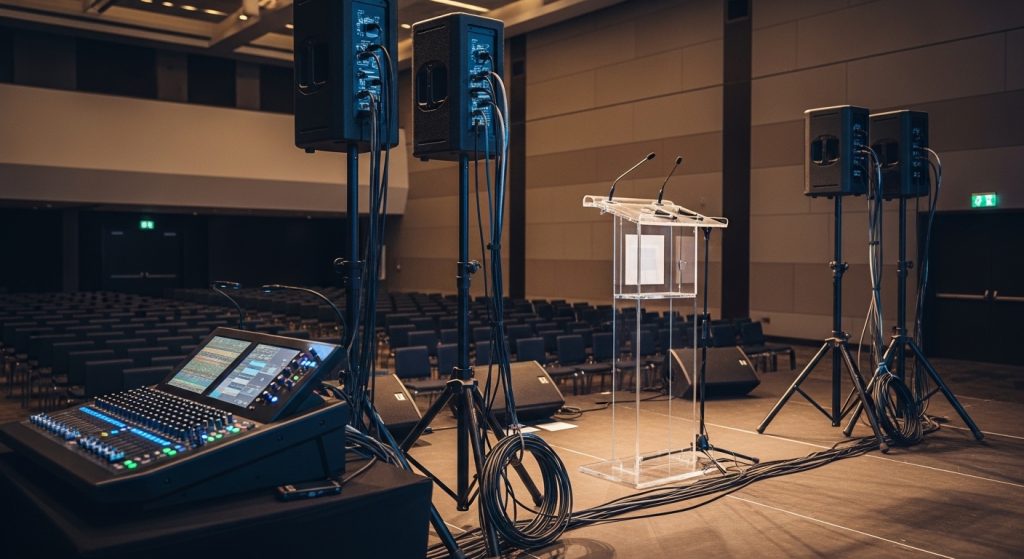
Clear communication defines operational success in busy commercial environments. In cities like Lahore, Karachi, and Islamabad, organizations handle constant movement, announcements, and coordination. Therefore, structured audio infrastructure becomes essential. A professionally designed public address system ensures that messages travel clearly across halls, terminals, factories, and institutions.
Noise levels often rise in industrial zones and transport hubs. As a result, speech can become unclear without controlled amplification. A reliable paging system solves this problem by delivering consistent audio coverage. Moreover, it improves safety, efficiency, and response time. Businesses that invest in proper sound planning protect both workflow and reputation.
What Is a Public Address System?
A public address system distributes voice signals to a large audience within a defined space. It amplifies speech and delivers it through strategically placed speakers. Unlike basic sound setups, it focuses on clarity rather than entertainment volume. Therefore, speech intelligibility remains the main goal.
In commercial buildings, a paging system supports announcements, emergency alerts, and daily coordination. Furthermore, modern systems integrate digital controls for zoning and scheduling. Because of this flexibility, organizations maintain structured communication even during peak hours.
Core Components of a Public Address System
Every audio paging system depends on coordinated components. Microphones capture voice signals with accuracy. Amplifiers increase signal strength without distortion. Speakers distribute sound evenly across defined zones. In addition, mixers balance multiple inputs when needed.

Signal processors refine tone and reduce background noise. Meanwhile, control panels manage routing and scheduling. Public address system components must match the building’s acoustic profile. Therefore, professional system design becomes critical for long-term performance.
Technical documentation often includes an audio paging system block diagram. This diagram explains signal flow from microphone to speaker. Similarly, an amplifier circuit diagram outlines electrical structure. While these diagrams may appear complex, they help technicians ensure stable operation.
Types of Public Address Systems
Commercial spaces require different system types. Conventional analog systems serve smaller facilities with limited zoning needs. However, large campuses prefer IP-based digital systems. These digital setups allow remote control and flexible configuration.
An industrial audio paging system supports factories and warehouses. These systems withstand dust, vibration, and temperature changes. Meanwhile, a sound paging network in hospital environments prioritizes clarity and emergency integration. In airports, an address system airport configuration manages multilingual announcements and zone control.
Voice alarm integration also plays a vital role. Therefore, many systems combine paging with emergency alerts. This integration enhances compliance and safety readiness.
Public Address System Design and Planning
Effective audio system design begins with site evaluation. Acoustic conditions influence speaker placement and power calculation. Therefore, engineers measure reverberation time and ambient noise levels. Proper zoning prevents sound overlap and distortion.
A sound paging network design guide often recommends load calculation before amplifier selection. Moreover, speaker sensitivity ratings determine distribution strategy. Without proper planning, uneven coverage reduces message clarity. Because of this, professional system design protects investment value.
Public address system specifications must align with building size and usage patterns. In large commercial complexes, distributed audio zones improve control. Consequently, management teams deliver announcements only where required.
Application in Commercial and Industrial Environments
In manufacturing facilities, an address system coordinates shift changes and safety alerts. Meanwhile, logistics hubs rely on real-time communication. Clear audio prevents confusion during operations. Therefore, industrial sites treat communication infrastructure as critical equipment.
Corporate offices also benefit from structured announcements. Training sessions, visitor coordination, and emergency communication require reliable systems. Similarly, a paging system in hospital environments supports patient calls and urgent alerts.
Airports present unique challenges. High ceilings and crowd movement increase echo. As a result, specialized speakers and digital processing become essential. Public address system airport solutions use controlled dispersion patterns for clarity.
Wiring, Diagrams, and Technical Structure
System reliability depends on proper wiring. A paging system wiring diagram outlines cable routing and amplifier connections. Therefore, installers follow structured layouts to prevent signal loss. Poor wiring increases distortion and failure risk.
Public address system block diagram documentation helps maintenance teams trace signal flow. Additionally, amplifier circuit diagrams explain internal amplification stages. These references simplify troubleshooting.
Digital systems reduce complex cabling by using network protocols. However, power distribution remains critical. Therefore, surge protection and backup power systems support uninterrupted communication.
Public Address System Price Factors
Price depends on scale and equipment quality. Large facilities require higher wattage amplifiers and distributed speakers. Therefore, system size influences cost. Installation complexity also affects pricing.
Brand reputation plays a role as well. For example, TOA PAGING system models often target professional markets. However, selection should focus on performance specifications rather than brand alone.
Maintenance planning influences long-term expense. Preventive servicing reduces equipment failure. Consequently, businesses protect operational continuity and avoid unexpected downtime.
Compliance and Safety Standards
Commercial audio systems must meet recognized standards. International guidelines such as IEC and NFPA provide safety frameworks. Therefore, compliant installations integrate voice alarm systems and backup power.
Fire safety integration remains essential in hospitals and industrial sites. In emergency situations, automated announcements guide occupants safely. Because of this function, proper certification becomes mandatory in many regions.
Common Installation Mistakes
Incorrect speaker placement reduces intelligibility. When installers ignore acoustic reflections, echo increases. As a result, speech becomes unclear. Underpowered amplifiers also create distortion during peak usage.
Failure to consider future expansion limits scalability. Therefore, modular design supports long-term growth. Businesses should avoid choosing systems solely based on initial price.
Maintenance and Long-Term Reliability
Routine inspections maintain audio quality. Technicians test amplifiers and verify speaker output levels. Moreover, software updates enhance digital system performance. Preventive maintenance extends system lifespan.
Dust accumulation in industrial environments reduces efficiency. Therefore, scheduled cleaning protects components. Documentation such as paging system specifications helps teams verify compliance during audits.
Choosing the Right Public Address System
Decision-makers must evaluate operational needs carefully. Facility size determines speaker count. Noise levels influence amplifier power. Meanwhile, zoning requirements shape control panel selection.
Professional consultation improves planning accuracy. Experienced engineers assess layout and recommend appropriate configurations. Consequently, organizations avoid costly redesigns. System selection should prioritize clarity, durability, and safety integration. When these factors align, communication becomes reliable and efficient
Acoustic Challenges in Large Commercial Buildings
Large commercial buildings create complex sound behavior. High ceilings increase reverberation. Glass walls reflect audio waves. Meanwhile, open hallways allow sound spill between zones. Therefore, acoustic planning must come before equipment installation.
In factories and transport terminals, background noise remains constant. Machinery, vehicles, and crowd movement reduce speech clarity. As a result, standard speaker placement fails to deliver clear announcements. Engineers must calculate coverage angles and decibel levels carefully. Proper calibration ensures balanced sound pressure across every zone.
Moreover, digital signal processing improves intelligibility in noisy environments. Modern paging solutions include equalization and delay adjustment features. These tools reduce echo and prevent overlapping signals. Consequently, announcements remain understandable even during peak activity.
Scalability and Future Expansion Planning
Commercial facilities rarely remain static. Companies expand operations. New departments open. Floor plans evolve. Therefore, communication infrastructure must support future growth.
An IP-based audio network allows modular expansion. Additional speakers connect through structured cabling or network switches. Meanwhile, centralized control software manages new zones without replacing core equipment. This flexibility protects long-term investment.
Forward-thinking design also considers redundancy. Backup amplifiers and secondary power supplies prevent downtime. In critical environments such as hospitals and airports, continuous communication remains non-negotiable. Because of this, system resilience becomes part of strategic planning.
Integration with Other Building Systems
Modern commercial environments rely on automation. Therefore, paging infrastructure often integrates with access control, CCTV, and fire detection systems. During emergencies, automated triggers activate pre-recorded instructions. This coordination reduces response time and enhances safety management.
Furthermore, integration supports daily efficiency. For example, security teams can broadcast targeted alerts to restricted areas. Event managers can schedule announcements without manual intervention. As a result, operations become smoother and more organized.
Evaluating Equipment Quality and Vendor Expertise
Selecting reliable hardware requires technical understanding. Speaker sensitivity ratings influence output clarity. Amplifier headroom determines distortion control. Meanwhile, enclosure durability matters in industrial zones.
However, equipment quality alone does not guarantee performance. Installation expertise determines final results. Experienced integrators conduct acoustic testing after installation. They measure sound pressure levels and adjust settings accordingly. Therefore, vendor capability directly affects system effectiveness.
Professional documentation also strengthens accountability. Detailed wiring diagrams and maintenance logs support future servicing. This structured approach builds trust in competitive urban markets such as Lahore and Karachi.
Why Structured Audio Systems Improve Brand Perception
Clear communication reflects professionalism. Visitors notice structured announcements and smooth coordination. Conversely, distorted or unclear paging creates confusion. Therefore, reliable audio infrastructure supports brand image.
In conference centers and corporate campuses, controlled announcements improve event management. Meanwhile, organized communication enhances employee confidence. Over time, these improvements influence overall operational perception.
Frequently Asked Questions
What is the main purpose of a public address system?
A public address system delivers clear announcements across large commercial spaces. It ensures structured communication during routine and emergency situations.
How does a public address system differ from a regular sound system?
A regular sound system focuses on entertainment. However, a public address system prioritizes speech clarity and zone control.
What affects public address system price?
System size, amplifier power, speaker quality, and installation complexity influence overall cost.
Can a public address system integrate with fire alarms?
Yes. Modern systems integrate voice alarm features for emergency guidance and compliance.
How often should maintenance occur?
Routine inspections should occur annually. Industrial environments may require more frequent checks.
Which industries use industrial public address systems?
Manufacturing plants, logistics hubs, airports, hospitals, and corporate campuses rely on structured audio systems.
Why is system design important?
Proper system design ensures even sound coverage, prevents distortion, and supports scalability.
Conclusion
A public address system forms the backbone of commercial communication. In fast-paced cities, organizations depend on structured audio for efficiency and safety. Therefore, professional planning, proper installation, and routine maintenance become essential.
Clear announcements build trust and prevent confusion. Moreover, integrated safety features protect occupants during emergencies. Businesses that invest in reliable communication infrastructure strengthen operational performance.
As technology advances, digital control and IP integration enhance flexibility. Consequently, modern address systems offer scalable solutions for growing facilities. When designed with precision, they deliver long-term value and dependable communication for commercial environments.