
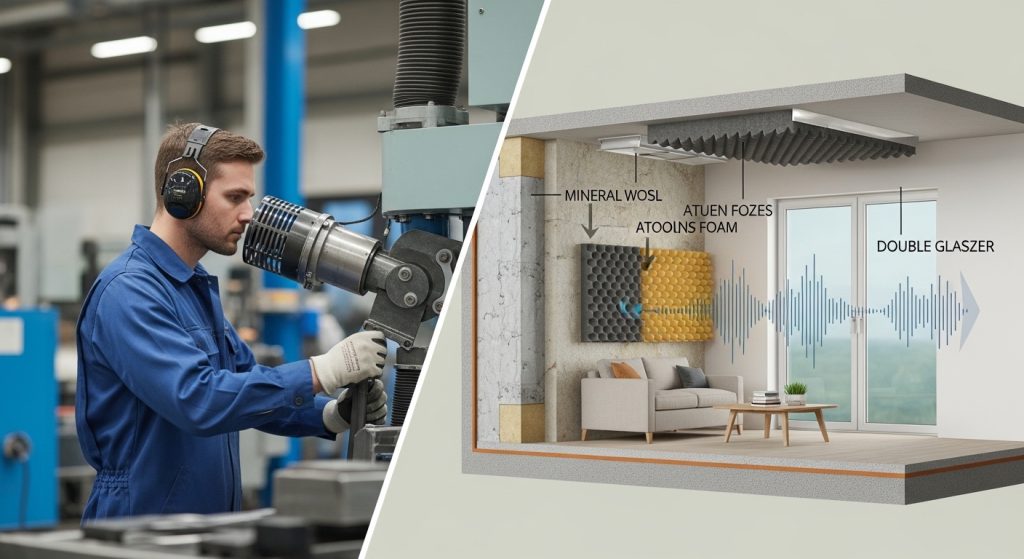
Noise is part of modern life. Unwanted sound comes in the form of traffic jams, building projects and noisy workplaces, as well as crowded apartments, all of which have an adverse impact on our health, comfort, and productivity. This is where acoustic protection becomes essential.
In this guide, you will learn what acoustic protection means, why it matters, how it works, and which materials and solutions are most effective for homes, offices, and industrial spaces.
What Is Acoustic Protection?
Acoustic protection refers to methods and materials used to reduce, control, or block unwanted sound. It shields individuals against noises that are harmful and enhances the sound comfort in buildings.
The term may have three main uses:
- Personal Hearing Protection – Earplugs and earmuffs that help you to protect your ears against disturbing noise
- Building Acoustic Protection – Soundproofing and sound insulation systems used in walls, floors, ceilings, and windows
- Industrial Noise Control – Barriers, enclosures, and vibration control systems used in factories and heavy machinery areas.
There are numerous websites that confuse these meanings. Nevertheless, it is essential to know the difference that each of the situations demands a different solution
Why Acoustic Protection Is Important
1. Protects Your Hearing
Excessive noises over an extended period of time may lead to noise induced hearing loss (NIHL). Long-periods of sounds greater than 85 decibels (dB) may cause irreversible hearing damage. Common sources include:
- Construction equipment
- Industrial machinery
- Loud music
- Traffic noise
Proper acoustic protection reduces this risk significantly.
Makes the Body Be Healthier and Happier
Noise pollution is linked to:
- Stress and anxiety
- Sleep disturbance
- Reduced concentration
- High blood pressure
Mental health and quality of life is enhanced by cutting noise in residential environments.
3. Increases Productivity
Over noise in offices and factories leads to lack of concentration and exhaustive effects. Effective acoustic insulation provides a better working environment environment that is less noisy
Types of Acoustic Protection
Hearing Protection: Personals
Applied in the work places and places of noise
- Earplugs– Small inserts that are inserted in the ear canal
- Earmuffs – This is used to cover the whole ear
- Noise-cancelling headsets – This is commonly applied to aviation or industrial environments.
The rating of these products is done with the help of the NRR (Noise Reduction Rating) which is used to indicate the number of decibels that they are able to mitigate
2. Building Acoustic Protection
This category aims at regulating sound within buildings
It can be done in two ways:
Soundproofing (Blocking Sound)
Seals allow no acoustical penetration in or out of space.
Sound Absorption (Abatement of Echo)
Reduces reflection that improves the sound quality in a room
Important technical terms:
- STC (Sound Transmission Class) – This is a measurement of the blocking (or resistant) of sound
- NRC (Noise Reduction Coefficient)– Indicates the level of sound absorption of a material
3. Industrial Acoustic Protection
Applied in factory and heavy business places:
- Machine acoustic enclosure
- Noise barriers
- Vibration isolation pads
- Silencers and mufflers
These remedies lessen noise on a large scale at the source
How Acoustic Protection Works
To understand acoustic protection, you need to know how sound behaves.
Sound travels in waves. These waves can:
- Reflect off hard surfaces
- Be absorbed by soft materials
- Pass through thin structures
- Cause vibration in connected surfaces
Effective acoustic protection works by:
- Adding Mass – Heavier materials block more sound (Mass Law principle).
- Absorbing Sound Energy – Soft and porous materials convert sound energy into heat.
- Isolating Vibrations – Preventing sound from traveling through structural connections.
- Sealing Gaps – Even small openings allow significant sound leakage.
Best Materials for Acoustic Protection
Choosing the right material depends on whether you want to block sound or reduce echo.
1. Mineral Wool (Rockwool)
- High STC performance
- Good for walls and ceilings
- Fire resistant
- Common in residential and commercial buildings
2. Acoustic Foam
- High NRC rating
- Best for echo control
- Ideal for studios and offices
- Not effective for blocking outside noise
3. Mass Loaded Vinyl (MLV)
- Dense and flexible
- Excellent for blocking airborne noise
- Used in walls, floors, and machinery enclosures
4. Double or Laminated Glass
- Reduces outside traffic noise
- Ideal for urban homes
- Works best when combined with proper sealing
Each material has different cost levels and performance characteristics. A proper assessment is necessary before installation.
Acoustic Protection for Homes
In residential spaces, common noise problems include:
- Traffic noise
- Neighbor noise in apartments
- Echo in large rooms
- Generator or machinery noise
Practical solutions include:
- Installing double-glazed windows
- Adding insulation inside walls
- Using solid-core doors
- Sealing gaps around frames
- Installing acoustic ceiling panels
For apartments, addressing shared walls and floors is critical. Often, professional consultation provides better long-term results than DIY solutions.
Acoustic Protection for Commercial and Industrial Buildings
Commercial buildings require higher performance standards.
Offices
- Acoustic ceiling tiles
- Sound-absorbing partitions
- Carpet flooring to reduce impact noise
Factories
- Machine enclosures
- Industrial noise barriers
- Vibration isolators
Schools & Hospitals
- Quiet environments improve learning and recovery
- Wall insulation and acoustic panels are essential
Industrial projects often require compliance with occupational noise safety standards.
Common Mistakes in Acoustic Protection
Many people misunderstand how sound control works. Common mistakes include:
- Using acoustic foam to block outside noise (foam absorbs, it does not block).
- Ignoring small gaps around doors and windows.
- Overlooking low-frequency noise, which requires heavier materials.
- Confusing soundproofing with sound treatment.
Understanding the difference between blocking sound and improving room acoustics prevents wasted money.
Standards and Noise Safety Guidelines
Workplace noise exposure is regulated in many countries. For example:
- 85 dB over 8 hours is typically the maximum safe exposure.
- Higher noise levels require protective equipment.
Building codes may also specify minimum STC ratings for walls in apartments and commercial properties.
Following proper guidelines ensures both safety and legal compliance.
How to Choose the Right Acoustic Protection Solution
Before selecting a solution, ask:
- Is the noise airborne (voices, traffic) or impact (footsteps, vibration)?
- Do you need personal hearing protection or structural soundproofing?
- What is your budget?
- How many decibels need to be reduced?
If the problem is external traffic noise, heavier materials and window upgrades are required. If the issue is echo inside a room, sound-absorbing panels are more effective.
Frequently Asked Questions
What is the difference between soundproofing and acoustic treatment?
Soundproofing blocks sound from entering or leaving a space. Acoustic treatment improves sound quality inside the room.
How many decibels are dangerous?
Prolonged exposure above 85 dB can cause hearing damage.
Is acoustic foam good for blocking sound?
No. Foam absorbs echo but does not effectively block outside noise.
What is the best material for noise reduction?
It depends on the application. For blocking sound, dense materials like mass loaded vinyl or insulated walls perform best.
Conclusion
Acoustic protection is essential for health, productivity, and comfort. Whether you need hearing protection in a factory, soundproofing in an apartment, or noise control in an office, the right solution depends on understanding how sound works.
By choosing appropriate materials, sealing gaps, and applying correct installation methods, you can significantly reduce unwanted noise. Proper acoustic protection is not just about comfort—it is an investment in long-term wellbeing and performance.
If you assess your noise problem carefully and apply the correct solution, effective and lasting noise control is absolutely achievable.