
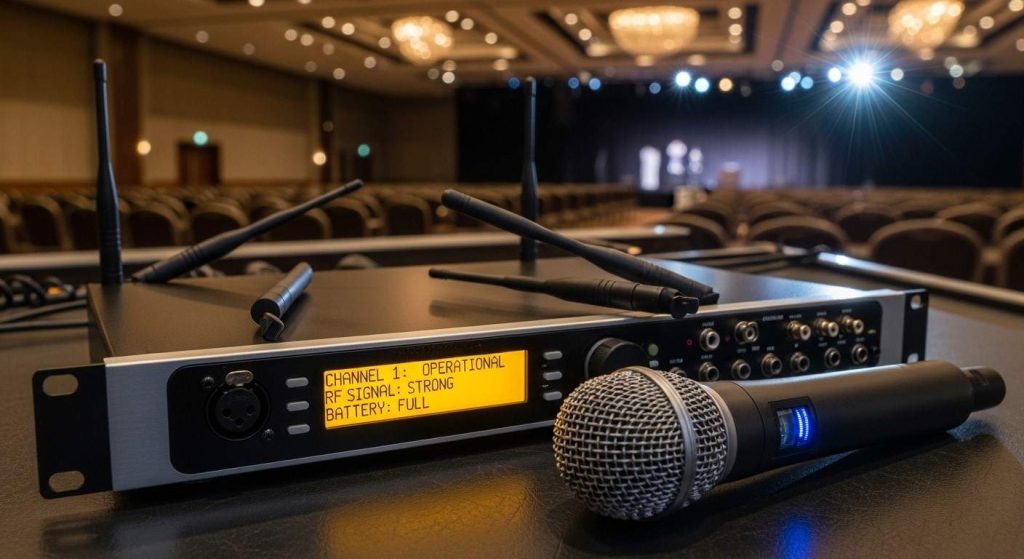
Clear communication builds credibility. Poor audio destroys it instantly. In corporate halls, conference centers, and industrial facilities, voice clarity affects performance, safety, and brand perception. A high-quality wireless mic ensures uninterrupted speech delivery across large commercial spaces. Businesses in Lahore, Karachi, and Islamabad now treat wireless audio as operational infrastructure, not optional equipment.
A professional wireless mic system eliminates cable limitations while maintaining consistent signal strength. Speakers move freely. Trainers engage confidently. Event hosts interact naturally with audiences. Modern organizations rely on structured wireless microphone systems to support conferences, product launches, training sessions, and institutional programs. When configured correctly, a wireless mic strengthens authority and improves audience engagement.
This guide explains how a wireless mic works, why it matters for commercial environments, how pricing varies in major cities, and how to choose the right system for professional use.
What Is a Wireless Mic and How It Works
A wireless mic transmits audio signals without physical cables. It converts voice into radio frequency signals. A receiver captures those signals and routes them into a mixer or sound system. This process ensures mobility without compromising clarity.
Most commercial systems operate on UHF frequency bands. These bands provide stable transmission in dense urban environments like Karachi and Lahore. Digital systems offer better resistance to interference. Analog systems remain popular for cost-controlled setups.
A complete wireless microphone setup includes a transmitter, receiver, antenna system, and audio output connection. The transmitter may attach to a handheld mic, lavalier, or headset. The receiver integrates into a sound system or public address system. Signal stability depends on frequency coordination and proper antenna placement.
Why Businesses in Lahore, Karachi, and Islamabad Choose Wireless Microphones
Corporate environments demand flexibility. Conference speakers cannot remain fixed behind podiums. Training facilitators need movement. Event moderators interact with audiences dynamically. A wired setup restricts natural communication.
In Lahore’s corporate centers, wireless microphone systems support executive presentations and board meetings. In Karachi’s event venues, they enable smooth panel discussions and live broadcasts. Islamabad’s educational institutions depend on stable wireless audio for seminars and academic programs.
Reliable wireless microphones reduce trip hazards. They eliminate cable clutter. They improve stage aesthetics. More importantly, they ensure uninterrupted delivery even in large auditoriums. When sound flows consistently, audience focus remains strong.
Wireless Mic Price in Lahore, Karachi, and Islamabad
Pricing depends on build quality, frequency range, battery technology, and brand reputation. Entry-level systems cost less but offer limited signal range. Professional models provide stronger transmission stability and longer battery life.
When evaluating wireless mic price in Lahore, buyers should compare frequency reliability and interference resistance. Karachi’s dense signal environment requires better RF management. Islamabad’s conference venues often prefer digital systems for secure transmission.
Wireless mic price in Karachi also varies based on application. Corporate installations demand multi-channel receivers. Event organizers may require expandable systems for multiple speakers. Price reflects performance capability.
Buyers searching for wireless mic price in Islamabad often compare UHF and digital models. While lower-cost models serve small spaces, commercial venues benefit from advanced frequency coordination.
Boya Mic Price in Pakistan vs Professional Commercial Systems
Boya wireless mic models remain popular for content creators and small setups and Boya mic price in Pakistan attracts budget buyers. However, commercial environments require more robust infrastructure.
Corporate and industrial settings require stable transmission over longer distances. They need interference management and multi-device coordination. Entry-level Boya wireless mic systems serve portable setups but may struggle in large venues.
Businesses comparing Boya mic price in Pakistan with premium systems must consider durability, frequency security, and scalability. Professional installations demand consistent output across multiple zones. Reliability matters more than initial savings.
Microphone Price in Pakistan: Understanding the Market Landscape
Microphone price in Pakistan varies based on type and intended use. Handheld dynamic microphones cost less than digital wireless systems. Bluetooth mic price in Pakistan remains lower but lacks professional RF stability.
When evaluating microphone price in Pakistan for commercial deployment, buyers should examine signal encryption, battery life, and compatibility with existing sound systems. Commercial buyers in Lahore and Karachi prefer equipment certified for regulated frequency use.
Microphone price in Pakistan also reflects warranty support and after-sales service. Established suppliers provide technical assistance and frequency planning. Long-term reliability reduces operational risk.
Types of Wireless Mic Systems for Commercial Use
Handheld wireless microphones support keynote speakers and public events. Lavalier systems offer discreet audio capture for presenters. Headset microphones provide secure placement for active trainers.
Conference venues in Islamabad often use multi-channel receivers to manage panel discussions. Corporate offices in Lahore prefer integrated wireless mic systems connected to central sound infrastructure. Event organizers in Karachi deploy dual or quad receiver systems for smooth stage coordination.
System selection depends on audience size, venue layout, and mobility needs. A structured wireless mic installation aligns with acoustic planning and speaker placement.
Wireless Mic Integration with Sound Systems and Public Address System
A wireless mic functions best within a calibrated audio ecosystem. It connects to mixers, amplifiers, and speakers. Proper gain staging prevents distortion. Digital signal processing refines tonal balance.
A public address system handles announcements and alerts. When integrated with wireless microphones, it supports presentations and live communication. Industrial facilities rely on this integration for operational coordination.
In Karachi’s manufacturing plants, wireless mic systems link directly to zone-based public address system networks. In Lahore’s corporate towers, centralized control panels manage multiple wireless channels simultaneously.
Proper installation ensures balanced signal routing. Frequency coordination prevents overlap between devices. Integration strengthens overall audio performance.
Technical Factors That Influence Wireless Mic Performance
Signal range defines how far the transmitter operates without dropouts. Interference resistance protects audio clarity in crowded signal environments. Battery efficiency determines operational continuity.
Commercial wireless mic systems operate within regulated RF bands. Frequency planning reduces cross-channel interference. Antenna positioning enhances signal capture.
Sound pressure level compatibility ensures smooth integration with amplifiers. Low-latency digital transmission improves synchronization in large conference halls. Stability remains the top priority in professional deployments.
Commercial Use Cases for Wireless Microphones
Corporate meetings require clear speech projection. Training centers demand mobility for instructors. Event venues require stable transmission across wide stages.
Hospitals use wireless mic systems for conferences and internal seminars. Educational institutions depend on consistent audio for lectures. Industrial facilities use structured communication systems for safety briefings.
Each environment requires a tailored wireless mic configuration. Commercial deployment prioritizes clarity, security, and scalability.
How to Choose the Right Wireless Mic for Business Use
Start with venue size. Large halls require stronger transmission and diversity receivers. Smaller conference rooms need compact systems with stable gain control.
Consider signal density in the area. Karachi’s urban environment demands better interference filtering. Lahore’s corporate zones often require multi-channel coordination.
Evaluate battery performance. Rechargeable lithium systems reduce downtime. Check compatibility with existing sound systems. Confirm frequency compliance with national telecom regulations.
A structured evaluation prevents performance issues later. Professional consultation ensures proper calibration and frequency allocation.
Maintenance and Long-Term Reliability
Routine inspection protects system stability. Clean microphone grills regularly. Monitor battery cycles. Update firmware for digital systems when available.
Technicians should test frequency coordination before major events. Preventive maintenance extends lifespan and protects investment. Commercial buyers in Islamabad and Lahore prioritize suppliers who provide service support.
Reliable wireless microphone systems operate for years when maintained properly. Neglect causes signal dropouts and audio distortion.
Future Trends in Wireless Mic Technology
Digital encryption enhances signal security. Automatic frequency scanning simplifies setup. Rechargeable battery docks improve efficiency.
Hybrid events require seamless integration with streaming platforms. Modern wireless mic systems support digital broadcast compatibility. Businesses in Karachi and Lahore increasingly demand scalable wireless infrastructure for hybrid meetings.
As organizations expand, structured wireless mic deployment becomes essential for professional communication continuity.
Frequently Asked Questions
Q: What is the difference between a wireless mic and a Bluetooth mic?
A: A wireless mic uses dedicated RF frequencies for stable transmission. Bluetooth mic systems offer shorter range and less reliability for commercial use.
Q: How much does wireless mic price in Lahore typically range?
A: Pricing varies by brand and performance level. Commercial systems cost more due to signal stability and multi-channel support.
Q: Is Boya mic suitable for corporate events?
A: Boya mic models suit small setups. Large commercial venues require stronger RF coordination and higher durability.
Q: What affects microphone price in Pakistan?
A: Frequency stability, digital technology, battery type, and brand support influence pricing.
Q: Can wireless microphones interfere with other devices?
A: Yes, improper frequency planning causes interference. Professional systems include coordination features to prevent overlap.
Q: How long does a commercial wireless mic last?
A: With proper maintenance, professional systems operate efficiently for many years.
Q: Why is frequency coordination important in Karachi and Lahore?
A: Dense urban signal environments require careful RF planning to maintain clarity and prevent dropouts.
Conclusion
Strong audio builds strong impressions. A professionally configured wireless mic ensures uninterrupted communication across corporate offices, institutions, and event venues. Businesses in Lahore, Karachi, and Islamabad increasingly prioritize structured wireless microphone systems to maintain clarity, mobility, and operational efficiency.

When organizations invest in reliable wireless mic infrastructure, they protect brand reputation and improve audience engagement. Clear speech drives confident decisions. In competitive commercial environments, consistent audio performance becomes a measurable advantage.