
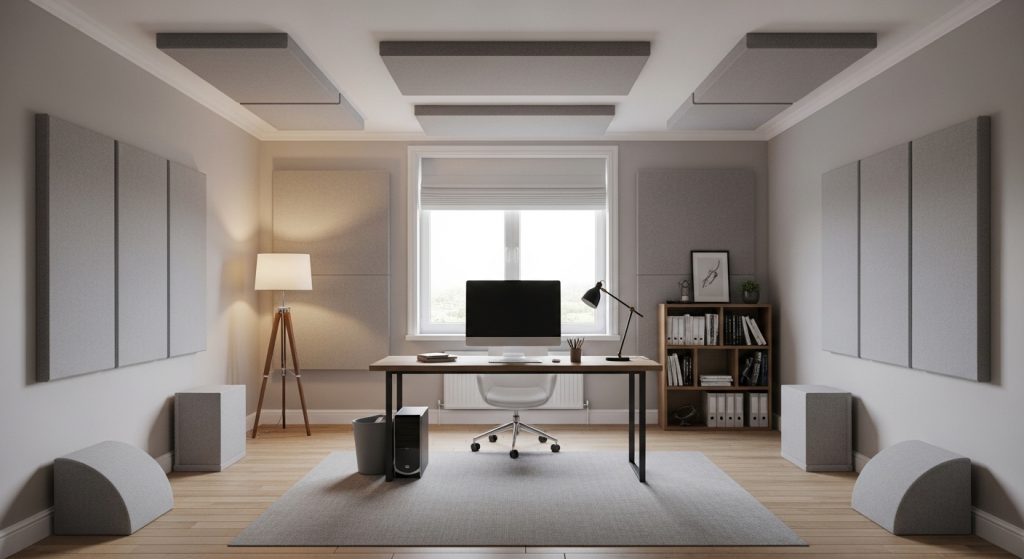
Controlling sound inside a room requires more than attaching foam to a wall. Many people search for soundproof acoustic panels hoping to eliminate noise problems, yet they often face echo, bass buildup, or sound leakage that panels alone cannot fix.
This guide explains how sound behaves in enclosed spaces, how acoustic treatment differs from soundproofing, and how to design a room that sounds clear, balanced, and controlled. It focuses on practical application rather than product hype, helping readers make informed decisions based on real acoustic principles.
Understanding Sound Problems Before Installing Soundproof Acoustic Panels
Every room has unique acoustic challenges. The first step is identifying the type of noise issue.
1. Internal Echo and Reverberation
Hard surfaces such as drywall, glass, and tile reflect sound waves. These reflections create:
- Echo
- Flutter echo
- Excessive reverberation
- Poor speech intelligibility
This issue is common in:
- Home offices
- Conference rooms
- Podcast studios
- Living rooms with minimal furniture
2. Sound Leakage Between Rooms
If noise travels through walls, ceilings, or floors, the issue is not echo. It is sound transmission. This requires structural solutions such as added mass, decoupling, or specialized construction methods—not just acoustic panels.
3. Low-Frequency Problems
Bass frequencies from subwoofers, music systems, or traffic tend to:
- Build up in corners
- Create uneven sound
- Travel easily through structures
Low-frequency control requires a different strategy than treating mid or high frequencies.
Identifying the problem correctly prevents wasted investment and unrealistic expectations.
How Sound Behaves in Enclosed Spaces
Understanding basic acoustics improves treatment decisions.
Reflection
Sound waves bounce off hard surfaces. Repeated reflections increase reverberation time and reduce clarity.
Absorption
Porous materials convert sound energy into heat. Materials such as fiberglass, mineral wool, and acoustic foam reduce reflected sound energy inside the room.
Diffusion
Diffusers scatter sound waves in multiple directions rather than absorbing them. This maintains liveliness while reducing harsh reflections.
Standing Waves and Room Modes
In rectangular rooms, low frequencies can reinforce or cancel each other at specific locations. These room modes create uneven bass response, especially in small studios or home theaters.
Room dimensions, ceiling height, and surface materials all influence these acoustic behaviors.
The Three Pillars of Indoor Sound Control
Effective acoustic design relies on three core principles.
1. Absorption
Absorption reduces echo and improves clarity. Soundproof acoustic panels fall into this category. They are typically made from:
- Acoustic foam
- Fiberglass boards
- Mineral wool panels
- PET polyester panels
Absorption works best on mid and high frequencies. Thicker panels improve low-frequency performance.
2. Isolation
Sound isolation blocks sound transmission between rooms. It depends on:
- Mass (dense materials such as drywall or concrete)
- Decoupling (resilient channels, isolation clips)
- Sealing gaps and flanking paths
Absorption panels alone do not provide significant isolation. Many consumers misunderstand this distinction.
3. Diffusion
Diffusers preserve energy while reducing harsh reflections. They are often used in:
- Music studios
- Home theaters
- High-end listening rooms
Balancing absorption and diffusion prevents the “dead room” effect.
Why Low Frequencies Are the Hardest to Control
Low-frequency sound waves are long and powerful. They easily penetrate walls and build up in corners.
Thin acoustic foam panels typically struggle below 250 Hz. This limitation explains why many users still experience:
- Muddy bass
- Boomy corners
- Uneven subwoofer response
To improve low-frequency control:
- Use thicker absorption panels (4 inches or more)
- Add air gaps behind panels
- Install bass traps in corners
- Position listening setups carefully
Understanding frequency response prevents unrealistic expectations from lightweight treatments.
Designing an Effective Acoustic Strategy
Before installing soundproof acoustic panels, define the room’s purpose.
For Speech Clarity (Offices, Conference Rooms)
Focus on:
- First reflection points
- Ceiling absorption
- Wall coverage between 20–40%
This improves intelligibility and reduces listening fatigue.
For Home Theaters
Prioritize:
- Front wall treatment
- Side reflection control
- Rear wall balance between absorption and diffusion
- Bass trapping in corners
This enhances cinematic immersion and balanced sound.
For Music Production or Recording
Emphasize:
- Symmetry around the listening position
- Corner bass trapping
- Controlled rear wall reflections
- Accurate monitoring environment
Each use case requires a slightly different acoustic treatment plan.
Strategic Placement of Soundproof Acoustic Panels
Placement matters more than quantity.
First Reflection Points
These are the locations where sound from speakers first reflects off side walls before reaching the listener. Treating these areas improves stereo imaging and clarity.
Ceiling Treatment
Ceiling clouds reduce vertical reflections and improve speech quality in offices and studios.
Corners
Corners accumulate low-frequency pressure. Installing bass traps here improves overall balance.
Rear Wall
Depending on room size, the rear wall may benefit from absorption, diffusion, or a combination.
Avoid randomly covering walls. Targeted placement produces better results with fewer materials.
Common Mistakes in Room Sound Control
Even well-intentioned users make errors.
Mistake 1: Expecting Panels to Soundproof a Room
Acoustic panels absorb internal reflections but do not significantly block sound transmission.
Mistake 2: Ignoring Bass
Treating only mid and high frequencies leaves bass issues unresolved.
Mistake 3: Over-Treating
Excessive absorption can remove liveliness, making a room feel unnatural.
Mistake 4: Ignoring Room Geometry
Large windows, uneven layouts, and asymmetry affect acoustic performance.
Recognizing these mistakes improves long-term results.
Comparing Materials Used in Soundproof Acoustic Panels
Different materials provide varying levels of performance.
Acoustic Foam
- Lightweight
- Easy installation
- Effective for mid/high frequencies
- Limited low-frequency absorption
Fiberglass Panels
- Strong broadband absorption
- Higher density options available
- Common in professional studios
Mineral Wool
- Excellent thermal and acoustic performance
- Good fire resistance
- Effective for thicker bass traps
PET Polyester Panels
- Made from recycled materials
- Durable and visually appealing
- Eco-friendly option
When selecting panels, consider:
- Thickness
- Density
- Fire rating
- Environmental impact
- Cost per square foot
Performance per inch is often more important than brand name.
When Surface Treatment Is Not Enough
Some problems require structural solutions.
Shared Walls and Apartments
If neighbors hear music or conversation, additional mass or decoupling may be necessary.
Structural Vibration
Low-frequency energy can travel through floors and framing systems.
HVAC and Gaps
Sound can travel through ducts, doors, and small openings.
In these cases, combining acoustic treatment with proper soundproofing methods yields better results.
Creating a Balanced Acoustic Environment
An effective room does not eliminate all reflections. Instead, it balances:
- Absorption for clarity
- Diffusion for natural ambience
- Isolation for privacy
Strategic use of soundproof acoustic panels enhances comfort, productivity, and audio quality without overcomplicating the space.
Room acoustics is both science and design. By understanding frequency behavior, material performance, and placement strategy, users can create environments that sound controlled, clear, and comfortable.
Final Thoughts
Sound control inside a room requires a structured approach. Identifying the problem, understanding sound behavior, and applying targeted acoustic treatment leads to better outcomes than randomly installing panels.
When used correctly, soundproof acoustic panels serve as an effective component of a broader acoustic strategy. They improve clarity, reduce echo, and enhance listening comfort—while true soundproofing demands structural consideration.
A well-designed room does not rely on guesswork. It relies on informed decisions grounded in acoustic principles.