
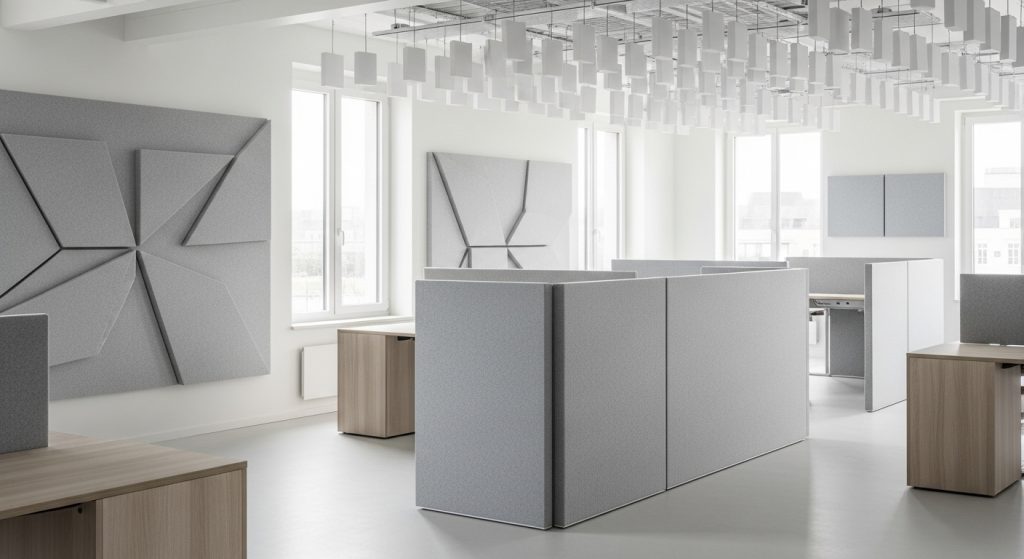
Acoustic protection plays a critical role in modern buildings, workplaces, and industrial environments. With the increasing density of cities and the increase in the power of the machinery, it is no longer a choice to control the undesired sound. It has a direct impact on health, productivity, privacy and regulatory adherence.
This guide explains acoustic protection from a technical yet practical perspective. It dissects the behaviour of sound, measures performance, the best materials to use and the selection of the correct solution to fit a particular environment.
What Is Acoustic Protection?
Acoustic protection refers to systems and materials designed to reduce, control, or isolate unwanted sound to protect people, spaces, and equipment. It has the sound absorption, sound isolation, vibration control and noise mitigation techniques.
It is not identical to such terms:
- Sound absorption inhibits echoes and reverberation in a room.
- Sound transmission between spaces is prevented by sound isolation (soundproofing).
- Noise control limits noise at the source of noise, transmission path or at the receiver.
Effective acoustic protection integrates these approaches rather than relying on a single product.
The Science Behind Acoustic Protection
How Sound Travels
There are two major ways of sound movement:
- Air noises – voices, music, traffic sounds.
- Structure-borne sound – vibrations that cause passage through the wall or floor or equipment.
The control of low-frequency sounds (bass, heavy equipment) is more difficult as these go through structures. Speech, alarms etc. are easier to absorb, but can pass through gaps.
Understanding the frequency profile of the noise source is essential before selecting any acoustic protection solution.
Acoustic Protection Metrics and Performance Standards
Most of the web tools do not address the performance metrics. However, credible acoustic protection requires measurable data
1. STC (Sound Transmission Class)
STC is used to determine the effectiveness of a building assembly in curbing airborne sound transmission through building spaces.
- STC 35: Normal speech is audible.
- STC 45: Loud speech is faint.
- STC 55+: Excellent privacy.
The increased STC ratings are a sign of sound isolation.
2. NRC (Noise Reduction Coefficient)
NRC is a measure of the level of absorption of a material within a room.
- NRC 0.25 = absorbs 25% of sound.
- NRC 0.80 = absorbs 80% of sound.
NRC values are commonly listed on the acoustic panels and the ceiling tiles.
The Outdoor-Indoor Transmission Class OITC.
OITC assesses the effectiveness of the building components to withhold outdoor noise like traffic or aircrafts.
Decibel (dB) Reduction
The decibel level is a logarithmic one. The decrease in perceived loudness of 10 dB is a significant one.
Testing Standards
Professional acoustic protection systems follow standards such as ASTM or ISO laboratory testing. The data of verified performance creates trust and makes sure that building codes are met.
Types of Acoustic Protection Materials and Systems
Effective acoustic protection depends on selecting materials based on their function.
Sound Absorption Materials
These materials decrease the echo and enhance clarity within a room.
- Mineral wool insulation
- Fiberglass panels
- Acoustic foam
- Fabric-wrapped panels
- Microperforated panels
They work by trapping sound energy within porous structures. Absorption is ideal for offices, classrooms, and studios where reverberation control is critical.
Sound Isolation Systems
Isolation blocks sound from traveling between rooms.
Common systems include:
- Double-stud wall assemblies
- Resilient channels
- Mass-loaded vinyl (MLV)
- Double or triple glazing
- Floating floors
Isolation requires mass, decoupling, and airtight construction. Gaps, flanking paths, and structural connections often reduce performance if not addressed properly.
Vibration Damping and Structural Control
In industrial environments, vibration control becomes essential.
Solutions include:
- Isolation mounts
- Damping compounds
- Machinery enclosures
- Acoustic barriers
These systems prevent structure-borne sound from spreading throughout a facility.
Advanced and Sustainable Acoustic Protection Materials
Modern acoustic protection continues to evolve.
Innovations include:
- Acoustic metamaterials engineered to block specific frequencies.
- Composite multi-layer systems combining mass and absorption.
- Recycled and bio-based acoustic panels.
- Hybrid thermal-acoustic insulation for energy efficiency.
Sustainable acoustic materials contribute to green building certifications and reduce environmental impact without sacrificing performance.
Acoustic Protection Applications
Acoustic protection strategies vary by environment.
Residential Acoustic Protection
In homes and apartments, common concerns include:
- Shared walls
- Traffic noise
- Home office privacy
- Bedroom quietness
Solutions often combine wall insulation, upgraded windows, and sealing of air gaps.
Commercial and Office Acoustic Protection
Speech privacy and productivity drive acoustic protection in offices.
- Open-plan offices require ceiling absorption and acoustic zoning.
- Conference rooms need high STC partitions.
- Healthcare and legal environments require confidential speech protection.
Poor acoustics reduce concentration and increase fatigue, making professional acoustic design essential.
Industrial Acoustic Protection
Factories and manufacturing plants must control machinery noise to protect workers and meet regulatory limits.
Effective industrial acoustic protection includes:
- Enclosures around noisy equipment
- Acoustic curtains
- Vibration isolation pads
- Source noise reduction strategies
Compliance with occupational noise exposure standards protects employee hearing and reduces liability.
Studios and Performance Spaces
Studios require two separate strategies:
- Isolation to prevent sound leakage.
- Interior treatment to optimize acoustics.
Bass control, diffusers, and broadband absorbers improve clarity while maintaining isolation integrity.
Confidential Acoustic Protection
In sensitive environments, acoustic protection safeguards information.
Methods include:
- High-STC wall systems
- Sound masking (white noise systems)
- Sealed partitions and doors
- Acoustic shielding panels
This approach is critical in executive offices, negotiation rooms, and secure facilities.
How to Choose the Right Acoustic Protection Solution
A structured decision process improves results.
Step 1: Identify the Noise Source
Determine whether noise is airborne, structural, or both.
Step 2: Measure Baseline Levels
Use a sound level meter to document current decibel levels.
Step 3: Analyze Frequency Range
Low-frequency noise requires heavier, decoupled systems.
Step 4: Define Performance Goals
Establish a target STC rating or decibel reduction.
Step 5: Select Materials Strategically
Combine absorption, mass, and decoupling where necessary.
Step 6: Address Flanking Paths
Seal gaps, penetrations, and structural bridges.
Common Mistakes in Acoustic Protection
- Assuming acoustic foam provides soundproofing.
- Ignoring low-frequency noise.
- Overlooking doors and ventilation openings.
- Installing materials without performance testing.
Professional acoustic design prevents costly errors.
Acoustic Protection vs Soundproofing vs Noise Control
These terms often overlap but differ in scope.
| Term | Focus | Primary Goal |
|---|---|---|
| Acoustic Protection | Overall sound management | Health and performance |
| Soundproofing | Isolation between spaces | Block transmission |
| Noise Control | Reduce noise at source | Lower exposure levels |
Understanding these distinctions improves communication with contractors and engineers.
Cost and ROI of Acoustic Protection
Costs vary based on:
- Material type
- Installation complexity
- Structural modifications
- Compliance requirements
However, acoustic protection offers measurable returns:
- Increased property value
- Improved employee productivity
- Reduced workplace injury risk
- Enhanced privacy and comfort
In commercial settings, improved acoustics directly influence occupant satisfaction and retention.
Sustainable Acoustic Protection and Green Design
Modern buildings prioritize environmental responsibility.
Sustainable acoustic protection includes:
- Recycled-content panels
- Low-VOC materials
- Energy-efficient insulation systems
- Designs aligned with LEED or WELL standards
Combining acoustic and thermal performance improves overall building efficiency.
Final Thoughts
Acoustic protection requires more than installing foam panels or thicker walls. It demands an understanding of sound behavior, measurable performance standards, and application-specific strategies.
When properly designed, acoustic protection enhances comfort, safeguards health, protects privacy, and improves building performance. By combining absorption, isolation, vibration control, and sustainable materials, professionals create environments that meet both regulatory requirements and user expectations.
Effective acoustic protection is not just about reducing noise. It is about engineering environments where people can focus, communicate, and operate without unwanted sound interference.
Frequently Asked Questions
What is the best material for acoustic protection?
There is no universal best material. The correct choice depends on frequency range, application, and performance targets.
How many decibels can acoustic insulation reduce?
Reduction depends on assembly design. Well-designed wall systems can reduce sound transmission by 40–60 dB or more.
Is acoustic foam good for soundproofing?
Acoustic foam improves sound absorption but does not significantly block sound transmission.
What STC rating is recommended for apartments?
An STC rating of 50 or higher typically provides acceptable privacy.
How is acoustic performance tested?
Laboratory and field tests follow recognized standards to measure transmission loss and absorption coefficients.