
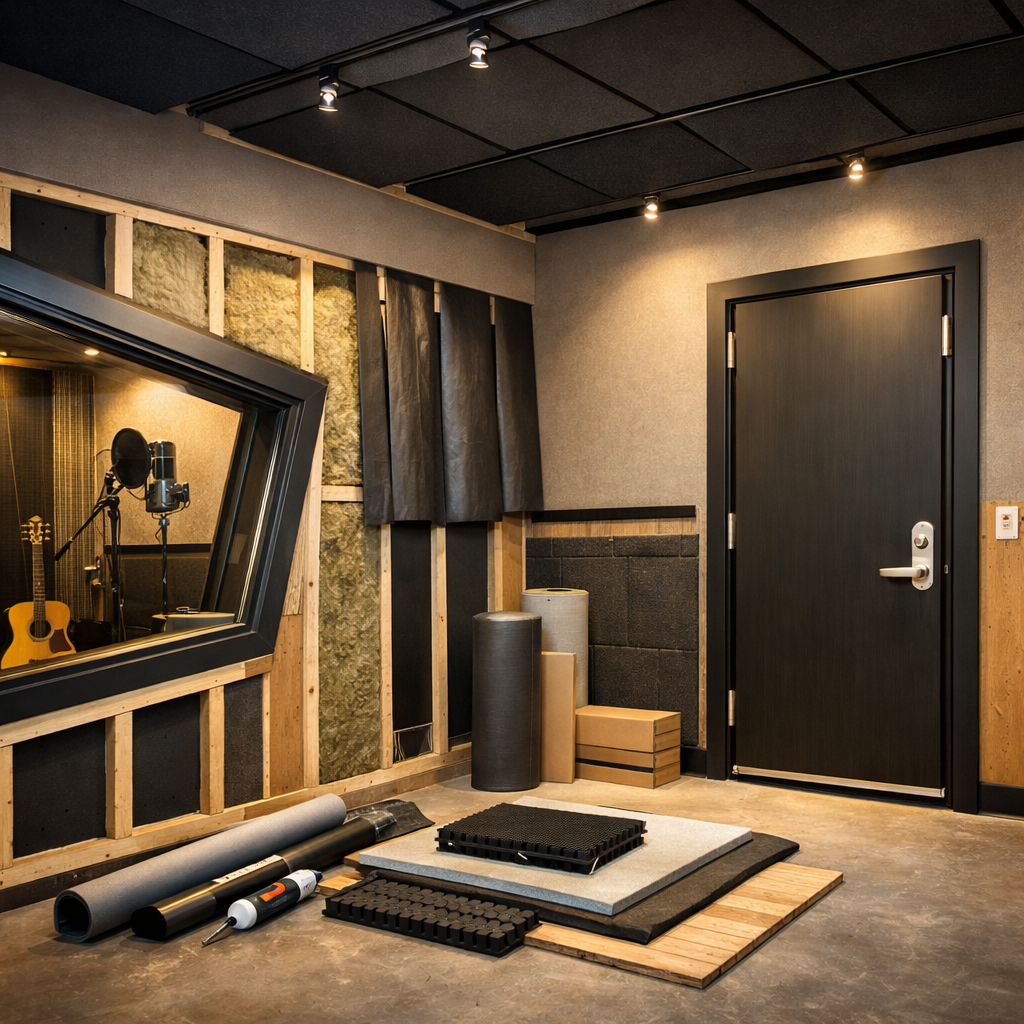
Soundproofing recording studios has been one of the greatest investments a person can make with regards to audio productions. In any studio, be it a commercial operation or in your home, sound leakage and/or preventing outside noise is vital to quality of recording, customer satisfaction, and future durability of the space.
Acoustic treatment enhances the sound within the room, and soundproofing prevents the sound entry/exits. This guide details the soundproofing of recording studios explaining how to do it, the materials, error sources, and professional best practices.
What Is Recording Studio Soundproofing?
Recording studio soundproofing is the process of isolating a studio space from external noise and preventing internal sound from leaking outside. This includes controlling airborne noise, structural vibrations, and low-frequency sound transmission.
Soundproofing is not achieved through a single product or panel. It requires a combination of construction techniques, materials, and design strategies based on physics and acoustical engineering principles.
Why Recording Studio Soundproofing Is Essential
1. Clean and Accurate Recordings
Traffic, neighbors, the HVAC, or people passing on the streets can completely ruin your records. Proper soundproofing makes the takes clean and uninterrupted.
2. Prevent Noise Complaints
Banging noises- particularly the deep bass- almost leap over walls and floors like an ill omen. Soundproofing prevents that to frustrate people around you.
3. Professional Studio Standards
Business studios must break the noise isolation requirement in order to accomplish tasks. Clients desire to have their privacy and a session not to be interrupted by some sort of noise.
4. Long-Term Cost Efficiency
Good soundproofing at the outset saves you the hassle of throwing money at retrofit or other large-scale building alterations later.
Soundproofing vs Acoustic Treatment Studio Soundproofing vs Acoustic Treatment
It is among the greatest misunderstandings in the design of the studio.
| Soundproofing | Acoustic Treatment |
|---|---|
| Stops sound from entering or leaving | Improves sound quality inside |
| Structural and construction-based | Uses panels, absorbers, diffusers |
| Expensive but permanent | More affordable and adjustable |
| Targets noise isolation | Targets echo and reflections |
A professional studio requires both, but soundproofing must be addressed first.
Core Principles of Recording Studio Soundproofing
1. Mass
Heavier structures block sound more effectively. Dense materials like concrete, gypsum boards, and mass-loaded vinyl are commonly used.
2. Decoupling
Decoupling separates structural elements so vibrations do not travel easily. Examples include double-stud walls and floating floors.
3. Damping
Damping reduces vibration energy within materials. Specialized compounds are used between layers of drywall to minimize resonance.
4. Airtight Construction
Sound travels through air gaps. Even small cracks can compromise soundproofing performance.
Key Areas to Soundproof in a Recording Studio
Recording Studio Walls
Walls are the primary barrier for sound isolation. Professional studio walls often use:
- Double-stud or staggered-stud framing
- Multiple layers of drywall
- Damping compounds between layers
- Insulation with high-density mineral wool
Single-layer drywall walls are insufficient for studio soundproofing.
Recording Studio Ceiling
Ceilings are often overlooked, especially in home studios.
Effective ceiling soundproofing may include:
- Suspended or floating ceilings
- Resilient channels or isolation clips
- Added mass using multiple drywall layers
This is especially important in apartments or multi-story buildings.
Recording Studio Floors
Low-frequency sound easily transfers through floors.
Common floor soundproofing solutions:
- Floating floors with isolation pads
- Rubber underlayment
- Concrete slabs for commercial studios
Improper floor isolation can render wall soundproofing ineffective.
Doors and Windows
Doors and windows are major weak points.
Professional recording studio soundproofing requires:
- Solid-core or acoustic doors
- Door seals and automatic door bottoms
- Double or triple-glazed studio windows
- Angled window installations to reduce reflections
A hollow door can undermine an entire soundproofing system.
Best Materials for Recording Studio Soundproofing
Mass-Loaded Vinyl (MLV)
Adds flexible mass to walls and ceilings, improving sound isolation without excessive thickness.
Mineral Wool and Rockwool
Used inside walls for sound absorption and vibration control.
Acoustic Sealants
Ensure airtight construction around joints, outlets, and seams.
Isolation Clips and Resilient Channels
Reduce vibration transfer between structural elements.
Common Recording Studio Soundproofing Mistakes
Relying on Foam Panels
Acoustic foam does not soundproof. It only treats reflections inside the room.
Ignoring Structural Noise Paths
Sound travels through floors, ceilings, and ventilation systems, not just walls.
Partial Soundproofing
Treating only one wall or surface leads to poor results.
DIY Without Proper Design
Soundproofing mistakes are expensive to fix once construction is complete.
How Much Soundproofing Is Enough?
The level of soundproofing required depends on:
- Studio usage (vocals, mixing, drums, live bands)
- Surrounding environment (residential, commercial, industrial)
- Legal noise limits
- Budget constraints
Professional recording studios can be designed to achieve certain ratings of STC (Sound Transmission Class) depending on application.
Soundproofing Services of a Professional Recording Studio.
Professional soundproofing services provide:
- Acoustic assessments and noise measurements
- Custom studio design and isolation plans
- Material selection based on performance goals
- Proper installation following industry standards
Hiring professionals ensures compliance with building codes and acoustical best practices.
Recording Studio Soundproofing for Home Studios
Home studios require a balanced approach:
- Focus on isolation from neighbors
- Optimize available space
- Use scalable solutions where full construction is not possible
Even partial soundproofing, when done correctly, can significantly improve recording quality.
Long-Term Value of Proper Soundproofing
Recording studio soundproofing is not just about noise control. It adds:
- Property value
- Professional credibility
- Operational flexibility
- Better working conditions
Studios that invest in proper isolation last longer and perform better.
Final Thoughts
Recording studio soundproofing is a technical process that demands planning, expertise, and the right materials. It cannot be achieved with surface-level solutions or shortcuts. When done correctly, soundproofing creates a controlled environment where creativity can thrive without limitations.
For studios that aim for professional-grade results, soundproofing is not optional—it is foundational.