
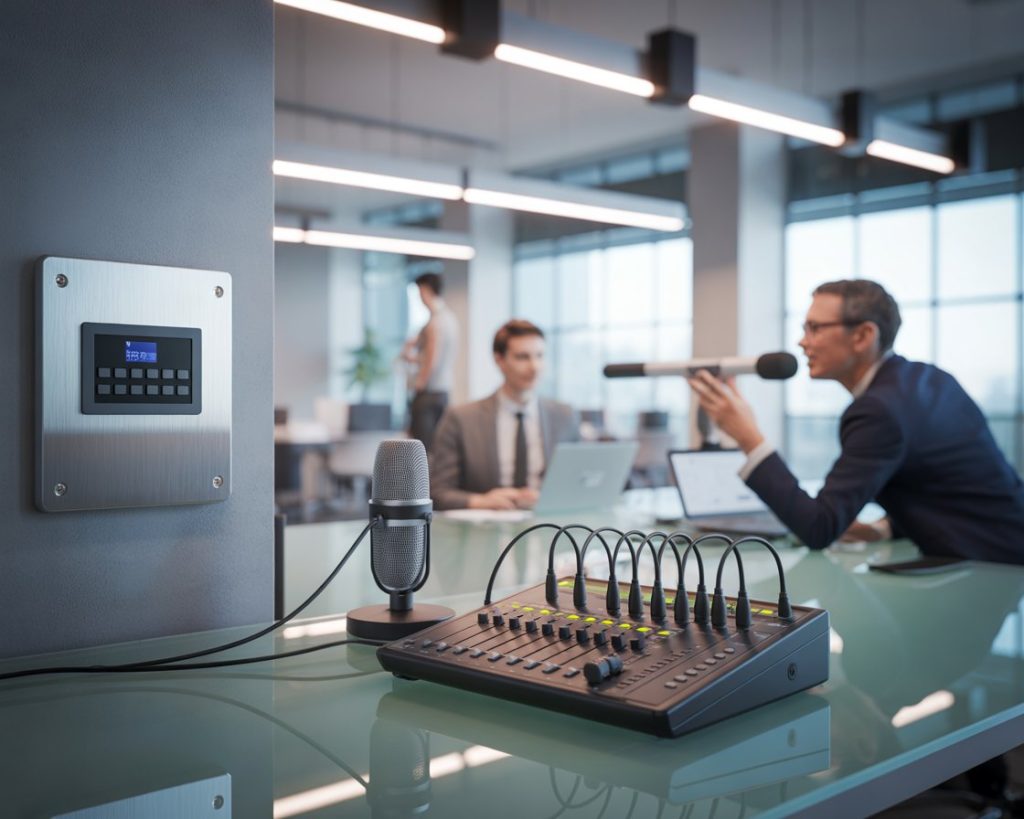
Clear communication separates smooth operations from complete chaos in any commercial facility. Whether managing a corporate office, hospital, school, or factory, a reliable public address system ensures your message reaches everyone when it matters most. Emergency alerts, daily announcements, and safety notifications all depend on professional audio infrastructure working flawlessly.
This guide explores what you need to know about PA systems for professional environments—how they work, why they matter, and what makes them indispensable for operational excellence.
What Makes a PA System Essential?
A public address system amplifies and broadcasts messages, music, or alerts to large groups simultaneously. Think of it as your facility’s voice, capable of reaching hundreds or thousands of people with crystal-clear sound quality.
Sound gets captured from microphones or audio sources, amplified electronically, and distributed through strategically placed speakers. This ensures everyone hears important information regardless of their location within the coverage area.
Modern installations have evolved dramatically beyond basic setups. Today’s solutions incorporate digital technology, network connectivity, and intelligent routing that transforms organizational communication. From routine announcements to emergency evacuation instructions, properly designed systems handle everything seamlessly.
The beauty lies in versatility. Single infrastructure serves multiple purposes: morning messages in schools, code alerts in hospitals, shift notifications in factories, and promotional content in retail spaces. This multi-functionality makes quality sound amplification a smart investment.
7 Critical Components You Need
Understanding these building blocks helps you make informed installation decisions.
1. Microphones and Input Devices
Sound capture starts everything. Microphones convert acoustic waves into electrical signals the system processes. Different applications need different microphone types based on operational requirements.
Professional paging consoles feature push-to-talk buttons, zone selection controls, and priority override functions. Critical messages always get through, even interrupting background music automatically when urgent announcements need broadcasting.
Modern systems accept inputs beyond microphones. Connect computers, music players, and other audio sources directly. This flexibility allows seamless switching between live announcements, pre-recorded messages, and background music without rewiring.
2. Amplifiers Driving Speaker Power
Amplifiers boost weak signals from microphones to levels strong enough for speakers. Without sufficient amplification, your message won’t carry beyond a few meters.
Traditional setups use centralized amplifiers in equipment rooms. IP-based voice evacuation systems distribute amplification differently—placing smaller units at speaker locations. This reduces wiring complexity and improves reliability.
Power needs vary dramatically. Small offices might need just 50-100 watts total, while large industrial facilities require thousands. Professional installers calculate precise requirements based on speaker quantities, coverage areas, and ambient noise levels.
Contemporary equipment distributes power on-demand rather than running at full capacity continuously. This reduces electricity consumption while providing ample power when needed.
3. Speakers Delivering Clear Audio
Speakers convert electrical signals back into acoustic sound waves. Placement, type, and quantity determine how well your sound amplification system covers the intended area with clear, intelligible audio.
Ceiling-mounted units provide discreet, evenly distributed sound ideal for offices and public facilities. These low-profile speakers blend into architectural finishes while delivering consistent coverage. Wall-mounted versions project sound more powerfully, working well in corridors and high-ceiling areas.
Outdoor applications demand weather-resistant speakers. Horn designs excel at projecting over long distances in parking lots and outdoor venues. These rugged units withstand rain, temperature extremes, and physical impacts.
Power ratings directly affect coverage. A 3-watt ceiling speaker typically covers 80-100 square feet, while 6-watt models handle 150-200 square feet. Industrial environments with high ambient noise require 10-15 watt speakers for adequate sound pressure levels.
4. Mixers and Control Equipment
Audio mixers function as command centers. These devices blend multiple sources, control volume levels, and route signals to specific facility zones. Think of mixers as traffic directors for sound—ensuring the right audio reaches the right places at proper volume.
Even simple installations benefit from basic mixing capabilities. Adjusting microphone volume separately from background music, applying equalization for speech clarity, and balancing multiple microphones all require mixer functionality.
Advanced digital mixers offer programmable presets recalling specific configurations instantly. Switch between morning announcements, lunchtime music, and evening events with one button press. This automation simplifies operations while ensuring consistent quality.
Control equipment includes monitoring systems detecting faults before they become serious problems. Visual indicators alert maintenance staff when speakers fail or amplifiers overheat, preventing communication failures during critical moments.
5. Network Infrastructure for Modern Systems
IP-based paging systems represent the latest evolution. Instead of dedicated audio wiring, these use standard computer networks to distribute audio digitally. This architectural shift brings numerous advantages making modern installations more flexible and powerful.
Network-attached speakers connect directly to your facility’s Ethernet infrastructure. Each speaker contains its own network interface, processor, and amplifier—eliminating centralized equipment rooms. This distributed architecture simplifies installation and reduces costs.
Digital audio transmission maintains perfect quality regardless of distance. Unlike analog setups where long cable runs introduce noise, network audio stays pristine from source to speaker.
These systems integrate seamlessly with other building technologies. Emergency notification platforms, security cameras, access control, and fire alarms can all trigger announcements automatically. This creates intelligent buildings communicating proactively rather than requiring manual intervention.
6. Backup Power and Redundancy
Critical facilities cannot afford communication failures during emergencies. Backup power systems ensure infrastructure continues operating when primary electrical service fails.
Battery backup provides temporary power during outages, typically lasting 30-90 minutes. For extended needs, automatic generator connections keep systems operational indefinitely.
Redundant components prevent single-point failures. Duplicate amplifiers, dual power supplies, and redundant network connections ensure communication continuity. Hospitals, emergency operations centers, and critical facilities should specify comprehensive redundancy.
7. Software Control and Management
Modern mass notification systems rely heavily on software for configuration, operation, and monitoring. User-friendly interfaces allow administrators to manage complex installations without technical expertise.
Scheduling software automates routine announcements like shift changes and break times. Messages play automatically at specified times without manual intervention.
Remote management capabilities let administrators adjust volume, change sources, and monitor system health from computers or smartphones. This eliminates walking to equipment rooms for routine adjustments.
Analytics provide insights into system usage, helping facilities optimize communication strategies based on actual announcement patterns.
Types of Sound Reinforcement Systems
Different applications demand different approaches.
Traditional Analog Systems
Analog setups use continuous electrical signals representing sound waves. Central amplifiers send audio through speaker wire to passive speakers throughout coverage areas.
The main advantage lies in simplicity and proven reliability. Technology is mature, widely understood, and easily serviced. For small to medium facilities with straightforward requirements, analog provides cost-effective solutions.
However, limitations exist. Adding speakers requires running new wire. Changing zone configurations means physical rewiring.
Digital Public Address System
Digital installations convert audio into numerical data computers process. This fundamental difference enables capabilities impossible with analog technology. Digital signal processing applies precise equalization and adjusts timing between speakers automatically.
Control systems allow remote management from anywhere with network access. Administrators can adjust volume, change sources, schedule announcements, and monitor system health remotely.
IP-Based Network Audio
IP-based public address system distribute audio over standard computer networks using Internet Protocol. This approach fundamentally changes how installations are designed and operated.
Network systems scale effortlessly. Adding new coverage simply means installing additional IP speakers on the network—no dedicated wiring to central equipment required.
Zoning flexibility peaks here. Administrators define any speaker grouping as a zone through software rather than physical wiring. Change your mind about area groupings? Simply update configuration—no electrician needed.
Real-World Applications
Educational Institutions
Schools rely on audio distribution systems for daily operations. Morning announcements communicate schedule changes and important reminders. Between-class tone signals coordinate building-wide transitions smoothly.
Emergency capabilities prove particularly important. Modern installations integrate with security systems, enabling instant lockdown announcements reaching every classroom simultaneously. This rapid response can save lives during critical incidents.
Healthcare Facilities
Hospitals represent perhaps the most demanding environment. These 24/7 operations require absolutely reliable communication delivering various message types simultaneously to different facility areas.
Code announcements alert staff to medical emergencies using standardized terminology. Patient care pages summon doctors to specific locations. All these communications happen continuously without disrupting patient care.
Sound amplification in healthcare requires careful balancing. Announcements must be loud enough for staff amid equipment noise, yet not disturb resting patients. Advanced systems apply different volume levels in patient rooms versus corridors automatically.
Industrial and Manufacturing
Factories present unique challenges. High ambient noise, large open spaces, and hazardous conditions demand robust solutions designed for industrial environments.
Voice amplification must overcome significant background noise—often 85-95 decibels—ensuring messages reach workers effectively. This typically requires higher-powered speakers and strategic placement to achieve adequate signal-to-noise ratios.
Safety communication proves absolutely critical. Emergency evacuation alerts, hazardous material warnings, and equipment shutdown instructions protect lives. Industrial installations often integrate with alarm systems, automatically triggering safety messages when sensors detect dangerous conditions.
Selecting the Right System
Choosing appropriate infrastructure requires careful consideration of numerous factors.
Assessing Coverage Requirements
Start by mapping your facility’s communication needs. Identify all areas requiring audio coverage: offices, corridors, restrooms, stairwells, parking structures, outdoor spaces. Don’t overlook mechanical rooms or storage areas where people might be during emergencies.
Calculate approximate speaker quantities based on coverage patterns. Ceiling speakers typically cover 80-200 square feet depending on power rating. Outdoor spaces require horn speakers reaching 50-100 meters.
Consider ambient noise throughout your facility. Quiet offices need less amplification than noisy production floors. Proper speaker selection ensures adequate sound pressure in all conditions.
Determining System Architecture
Budget, technical expertise, and expansion plans influence whether analog, digital, or IP-based solutions make sense.
Analog systems offer lowest initial cost for small installations. If you need basic announcement capabilities in a single building, analog provides reliable, cost-effective solutions.
Digital installations balance cost and capability for medium-sized facilities. Enhanced audio quality, remote management, and flexible routing justify moderate premiums over analog alternatives.
IP-based network systems represent the future of facility communication. Although initial costs run higher, long-term flexibility and integration capabilities often justify investment. Growing organizations and multi-building campuses benefit tremendously from network architecture.
Professional Installation Matters
Proper installation makes the difference between systems that work reliably and those that underperform.
Professional design begins with comprehensive facility analysis. Acoustic consultants measure ambient noise, evaluate architectural acoustics, and model sound coverage using specialized software. This engineering approach ensures designs meet performance specifications before installation begins.
Code compliance cannot be overlooked. Building codes specify minimum audio levels for life safety systems and backup power requirements. Professional designers ensure systems meet all applicable regulations from the outset.
Testing and commissioning verify every component functions correctly before acceptance. Technicians measure sound pressure throughout coverage areas, verify zone routing operates as designed, and confirm emergency override functions work reliably.
Soundkrafted: Professional Audio Solutions
Soundkrafted specializes in designing and implementing professional-grade public address systems for commercial, industrial, and institutional facilities throughout Pakistan. Our expertise spans small single-building installations to complex multi-site networks requiring sophisticated integration.
We understand every facility has unique communication requirements. Our approach begins with comprehensive acoustic assessment and needs analysis before recommending solutions. This consultative methodology ensures you invest in systems matched precisely to operational requirements.
Our technical team stays current with emerging technologies including IP-based network audio, emergency mass notification integration, and building automation connectivity. Facilities working with Soundkrafted benefit from forward-thinking designs accommodating future growth.
Beyond installation, we provide ongoing technical support ensuring your communication infrastructure continues performing optimally. Our maintenance programs catch potential issues before they become operational problems, protecting your investment long-term.
Conclusion
Professional audio communication systems are vital investments for any facility that needs reliable messaging—from everyday announcements to urgent safety alerts. These platforms ensure that spoken messages are clear and audible throughout your space, helping improve both operations and safety.
Advances in audio technology have expanded what’s possible. Contemporary IP-based Public Address system provide greater flexibility, centralized management, and seamless integration with other platforms, while digital processing ensures clear, high-quality audio throughout every zone.
Choosing the right system should be based on your facility’s size, communication needs, and budget. In Pakistan, basic setups can start from around PKR 30,000–150,000 for small analog systems, while more advanced digital and networked systems may range from PKR 100,000 up to several million depending on scale and zones covered.
Whether you select a simple analog system, a sophisticated digital configuration, or a cutting‑edge networked architecture, professional design and installation help ensure optimal performance. High‑quality systems not only support safety and efficiency but also enhance your facility’s professional image while offering long‑term value.
Frequently Asked Questions
Q1: What’s the difference between a Public Adress system and regular speakers?
A public address system is a complete communication setup that includes microphones, amplifiers, control equipment, and multiple speakers positioned to cover large areas. Regular speakers typically just play music or audio from a single source without coverage control or mic inputs. A Public Adress system enables announcements, zoned audio, and integration with emergency alerts.
Q2: How much does professional installation cost in Pakistan?
Costs vary by facility size and system type. A small analog Public Address System for offices or small venues may start around PKR 30,000–150,000, while more advanced digital or network systems for larger buildings or campuses can range from PKR 200,000 up to over PKR 2,000,000.
Q3: Can we install Public Address systems ourselves?
For permanent and safety‑critical installations, professional setup is highly recommended. Building codes and safety standards often require specific coverage and integration (especially for emergency communication). Professionals ensure full zone coverage, correct wiring, integration with fire alarms, and system tuning.
Q5: What routine maintenance do these systems need?
Test all speaker zones monthly to catch issues early. Check speaker mounts and cables quarterly. Schedule professional servicing annually for deep cleaning and system tuning. Speakers might last 10–15 years with proper care, and backup batteries in emergency panels should be replaced every 3–5 years to ensure reliability when it matters most.