
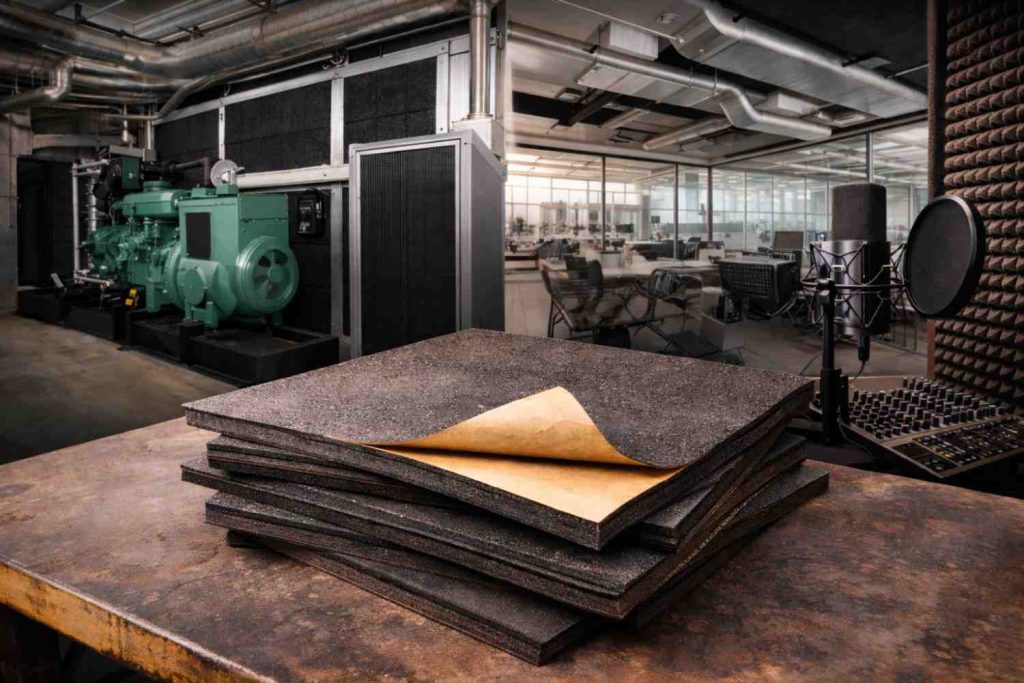
At first, most people think a damping sheet is only used to reduce sound. In reality, its role is much deeper. It controls vibration, stabilizes machinery, protects equipment, and improves working conditions. In industrial and commercial environments, noise is not just an inconvenience. It is a safety risk, a productivity issue, and a maintenance challenge.
This is why the damping sheet has become a core element in modern noise and vibration control systems. It is used where machines operate continuously, where HVAC systems generate vibration, and where generators or compressors create disturbing sound waves. A properly selected damping sheet does not only reduce noise. It increases the lifespan of equipment and improves operational efficiency.
From factories to commercial buildings, the use of damping solutions is no longer optional. It is a professional standard.
What Is a Damping Sheet?
A damping sheet is a specially engineered material designed to absorb vibration energy and convert it into low-level heat. This process prevents vibration from traveling through surfaces such as metal panels, machine bodies, ducts, or enclosures. When vibration is controlled, noise is automatically reduced because sound is born from vibration.
Unlike traditional soundproofing materials that block sound waves, a damping sheet targets the source of noise. It works directly on the vibrating surface. This makes it one of the most effective tools in noise control engineering.
A high-quality damping sheet is flexible, dense, and durable. It adheres firmly to surfaces and remains effective even under high temperature and heavy mechanical stress. This reliability is why it is widely used in industrial vibration control systems.
How a Damping Sheet Works
Vibration occurs when machines move or rotate. That movement causes surfaces to oscillate. These oscillations turn into sound waves that spread through the air. A damping sheet interrupts this process.
When applied to a vibrating surface, the damping sheet absorbs the energy created by movement. Instead of letting the vibration travel, it transforms that energy into a tiny amount of heat that is safely dissipated. The vibration weakens, and the noise drops significantly.
This mechanism makes a damping sheet different from simple insulation. It is not about covering noise. It is about stopping vibration at its origin.
This is the reason professionals use an industrial vibration damping sheet in machinery rooms, power plants, and heavy manufacturing zones.
Why Damping Sheets Are Essential in Modern Industries
Noise pollution damages concentration, causes fatigue, and increases workplace stress. Over time, it can lead to hearing damage and reduced employee productivity. Machinery vibration also loosens bolts, cracks structures, and shortens equipment life.
A damping sheet solves both problems together. It controls vibration and reduces noise at the same time.
In industrial settings, it is commonly used as a machinery noise damping sheet to stabilize equipment like presses, cutting machines, and CNC units. When vibration is minimized, machines operate more smoothly and require less maintenance.
Similarly, an equipment sound damping sheet is installed inside machine housings and control panels to prevent resonance and echo.
Damping Sheet vs Traditional Soundproofing
Many people confuse damping sheets with soundproof panels or acoustic foams. They serve different purposes.
Soundproofing materials block sound transmission. They work best when placed between two rooms. Damping sheets work directly on vibrating surfaces. They stop noise before it spreads.
For example, placing acoustic foam near a generator reduces reflected noise. Applying a generator noise damping sheet directly on its metal housing reduces noise production at the source. The second approach is far more efficient.
This is why professional systems combine both techniques. Damping sheets handle vibration, and soundproof panels manage airborne noise.
Role of Damping Sheets in HVAC Systems
HVAC systems generate continuous vibration due to fan movement, airflow pressure, and mechanical rotation. Over time, this vibration transfers into walls, ducts, and ceilings. That is why many commercial buildings suffer from humming or rattling sounds.
An HVAC vibration damping material is installed on ducts, compressor housings, and mounting structures. It absorbs vibration energy and prevents sound from traveling through the building framework.
Using a damping sheet in HVAC systems improves comfort, reduces noise complaints, and protects equipment from premature wear.
Damping Sheets for Heavy Equipment
Large machines such as generators and compressors are major noise sources. Their vibration is intense and persistent.
A generator noise damping sheet is installed inside the enclosure or on external metal panels. It stabilizes the structure and lowers sound output.
Similarly, a compressor vibration damping sheet prevents shaking and mechanical stress. Compressors run continuously, so vibration control becomes critical for both safety and durability.
In both cases, damping sheets reduce operational stress while improving sound control.
Why Professionals Prefer Acoustic Damping Sheets
An acoustic damping sheet for machinery is not chosen randomly. Engineers evaluate thickness, weight, adhesive strength, and temperature resistance before installation.
Professional-grade damping sheets:
- Maintain performance under heavy vibration
- Do not crack or peel
- Resist oil, moisture, and heat
- Stay effective for years
This reliability supports long-term industrial stability and noise management.
Anti-Vibration Sheets in Industrial Use
An anti vibration sheet for industrial use is installed under machines, on metal housings, and inside enclosures. Its purpose is to stabilize movement and reduce surface oscillation.
These sheets improve:
- Machine precision
- Operator safety
- Equipment lifespan
- Workplace comfort
In industries where precision matters, vibration control is not optional. It is a requirement.
Why Damping Sheets Build Topical Authority in Noise Control
Noise control is not only about silence. It is about energy management. A damping sheet shows technical mastery because it addresses vibration, not just sound.
Experts rely on damping technology because:
- It is scientifically proven
- It works directly at the vibration source
- It integrates with other acoustic systems
- It improves mechanical reliability
This is why damping sheets are now standard in professional acoustic engineering.
Correct Installation of a Damping Sheet
The performance of a damping sheet depends heavily on how well it is installed. Even the highest-quality material will fail if it is applied incorrectly. Professional installers always begin by cleaning the surface. Dust, oil, grease, and moisture reduce adhesive strength and allow vibration to pass through weak points.
Once the surface is clean, the sheet is pressed firmly against the metal or panel. Full contact is essential. Any trapped air pockets reduce effectiveness. In industrial environments, rollers are often used to ensure strong bonding and even pressure.
Another important factor is coverage. A sheet does not always need to cover the entire surface. Strategic placement on vibration-prone areas such as machine housings, duct joints, generator panels, and compressor enclosures often delivers excellent results while keeping material use efficient.
Correct installation transforms a simple damping sheet into a long-term vibration control solution.
Common Mistakes That Reduce Effectiveness
One common mistake is applying a damping sheet on unstable or moving surfaces. The material works best when attached to solid panels that vibrate. Loose structures must be reinforced before installation.
Another mistake is using very thin sheets for heavy machinery. Industrial equipment requires thick, high-mass materials. Lightweight sheets are suitable for light equipment but fail under strong vibration.
Some users apply damping sheets expecting full soundproofing. That leads to disappointment. A damping sheet controls vibration, not airborne sound alone. It must be combined with insulation and absorption systems for complete acoustic treatment.
Improper temperature handling is another issue. Certain sheets lose flexibility in extreme cold or heat. Choosing a product designed for industrial environments avoids this risk.
Choosing the Right Damping Sheet for Your Project
Selecting the right damping sheet is not about choosing the cheapest option. It is about matching performance to application.
For heavy machines, an industrial vibration damping sheet with high density is essential. These materials withstand intense movement and continuous stress.
For HVAC systems, HVAC vibration damping material must be flexible and heat-resistant. It should bond well to metal ducts and compressor housings without peeling over time.
In power generation zones, a generator noise damping sheet should handle heat, oil exposure, and vibration intensity.
For compressors, a compressor vibration damping sheet must combine strong adhesion with durability to survive long operating hours.
When dealing with enclosed equipment, an equipment sound damping sheet stabilizes panels and prevents resonance.
For machinery housings, an acoustic damping sheet for machinery offers the best balance between vibration control and acoustic performance.
And when general vibration control is required, an anti vibration sheet for industrial use becomes a foundational solution.
Each application demands a different specification. Professional evaluation always leads to better long-term results.
How Damping Sheets Improve Equipment Lifespan
Vibration is one of the biggest enemies of mechanical systems. It loosens bolts, weakens joints, damages bearings, and accelerates fatigue in metal structures.
By reducing vibration, a damping sheet protects machines from internal stress. This directly increases equipment lifespan. It also reduces maintenance costs and prevents sudden breakdowns that interrupt operations.
Industries that invest in vibration control systems report fewer mechanical failures and more stable machine performance. Over time, damping sheets pay for themselves through reduced downtime and repair costs.
Industrial Case Applications
In manufacturing plants, damping sheets are used on CNC machines, stamping equipment, and cutting units. These machines produce high vibration that affects accuracy and operator comfort.
In power facilities, damping sheets play a vital role by stabilizing generators while lowering the noise produced inside their enclosures.
Within HVAC rooms, their application helps control duct vibration, which in turn limits the transfer of unwanted sound into nearby office areas.
Data centers also benefit from vibration control, as it shields sensitive equipment from mechanical disturbances that could affect performance.
Together, these applications show how a damping sheet becomes the first and most reliable line of defense against vibration-related problems.
Why Damping Sheets Are a Long-Term Investment
Some companies hesitate because of initial cost. However, damping sheets are not consumables. Once installed correctly, they function for many years.
Their value lies in:
- Reduced maintenance
- Improved workplace comfort
- Higher safety standards
- Lower equipment replacement costs
- Better compliance with noise regulations
Viewed this way, a damping sheet is not an expense. It is an investment in stability.
Future Trends in Damping Technology
The future of damping sheet technology is moving toward lighter materials with higher vibration absorption. Manufacturers are developing sheets that offer stronger damping with reduced thickness.
Eco-friendly formulations are also becoming common. These materials reduce environmental impact without sacrificing performance.
Smart damping systems are emerging, where vibration data is monitored in real time and material placement is optimized using sensors and analytics.
This evolution will make damping sheets even more effective and essential in modern industrial design.
Conclusion
A damping sheet is not just a noise control product. It is a vibration management solution that protects machinery, enhances workplace comfort, and improves operational efficiency.
From industrial vibration damping sheet applications to HVAC vibration damping material and generator noise damping sheet installations, damping technology plays a critical role in modern engineering.
When used correctly, it becomes the foundation of stable, quiet, and efficient industrial environments. Its importance continues to grow as industries demand higher performance and stricter noise control standards.
Frequently Asked Questions
1. How many times should a damping sheet be applied on a surface?
In most cases, a single properly installed layer is sufficient. Heavy vibration zones may require double-layering for maximum control.
2. Can damping sheets be used outdoors?
Yes, if they are weather-resistant and designed for industrial exposure to heat, moisture, and oil.
3. Do damping sheets reduce airborne noise?
Indirectly. They reduce vibration that creates noise, but they work best when combined with insulation and absorption materials.
4. Are damping sheets safe for long-term use?
Yes. High-quality sheets remain stable for years without degradation when installed correctly.
5. Where should these sheets be applied first?
Always start with the strongest vibration sources such as generator housings, compressors, and machinery panels.