
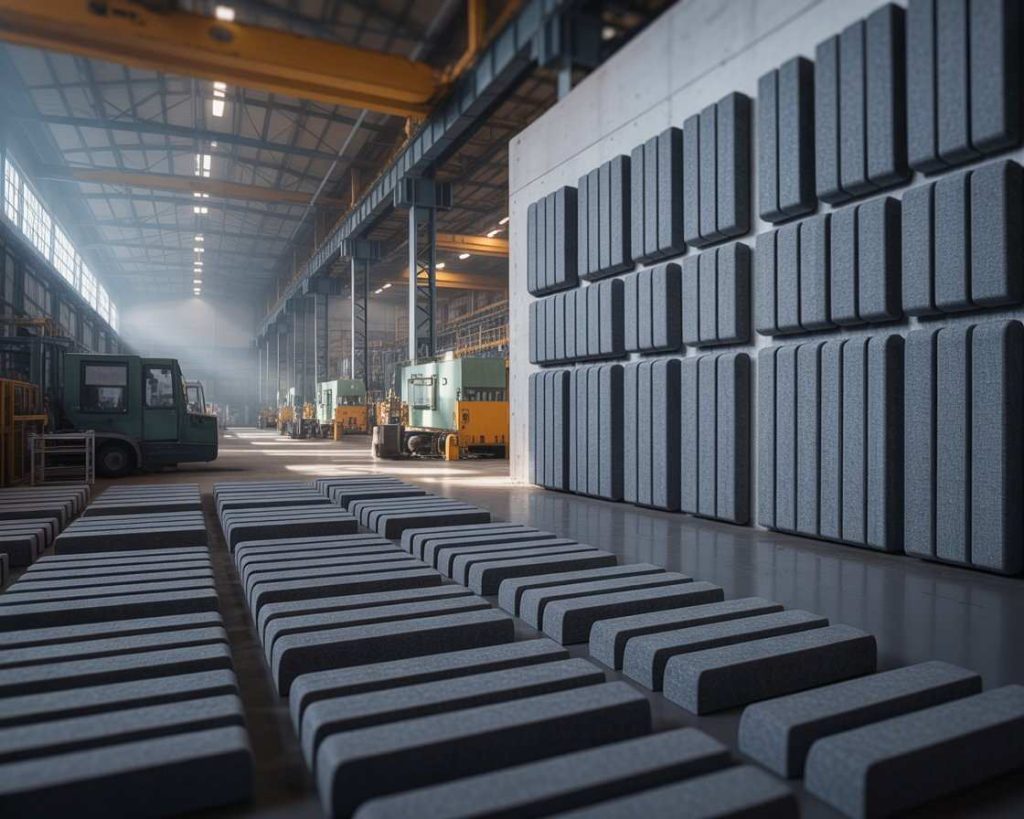
Uncontrolled noise is a serious challenge in professional environments. From busy offices and call centres to recording studios, conference rooms, and commercial spaces, unwanted sound can reduce productivity, disrupt communication, and degrade the overall experience. Soundproof panels provide an effective and measurable solution for improving acoustic performance and controlling noise in these environments.
This guide explains what soundproof panels are, how they work, their benefits, types, installation considerations, and how to select the right panels in Pakistan.
What Are Soundproof Panels?
Soundproof panels are specialized materials designed to absorb, block, or diffuse sound within professional and commercial spaces. They control reverberation, echoes, and noise transmission to improve clarity, focus, and acoustic quality. Unlike simple decorative materials, high-quality panels are engineered for measurable performance and durability.
In Pakistan, these panels are widely used in:
- Corporate offices and meeting rooms
- Recording and broadcast studios
- Call centres and conference facilities
- Commercial buildings such as hotels, restaurants, and educational institutions
How Soundproof Panels Work
Sound travels as vibrations through the air and surfaces. Soundproof panels control these vibrations in three main ways:
1. Absorption
Panels absorb sound waves inside a room to reduce echo and reverberation, making communication and audio experiences clearer.
2. Blocking
High-density panels prevent sound from leaving a space or entering from external sources, enhancing privacy in offices and studios.
3. Diffusion
Some panels scatter sound waves evenly, balancing acoustics and eliminating harsh focal points in large rooms.
Professional spaces often use a combination of absorption, blocking, and diffusion for optimal performance.
The Role of Modern Acoustic Engineering in Professional Spaces
Modern acoustic engineering has evolved beyond simple noise reduction. It now focuses on creating sound environments that support clarity, efficiency, and comfort without disrupting operational flow. In professional spaces, acoustics must be predictable and measurable. This is why organizations invest in structured acoustic systems rather than temporary fixes. The materials used must meet durability, fire safety, and performance standards, especially in industrial and corporate facilities.
An important aspect of acoustic design is understanding how sound behaves in large spaces. High ceilings, glass partitions, metal surfaces, and open layouts reflect sound differently. Without treatment, these features can amplify noise rather than control it. Strategic acoustic placement allows sound energy to be dispersed and absorbed where necessary, ensuring that speech remains intelligible and background noise is minimized.
The Role of Technology in Acoustic Planning
Technology also plays a role in modern acoustic planning. Advanced modeling software helps predict how sound will behave before installation begins. This allows engineers to test configurations digitally and avoid costly trial-and-error approaches. Accurate planning results in faster implementation and more consistent performance.
Sound Management as an Engineering Discipline
By approaching sound management as an engineering discipline rather than a design element, organizations create spaces that support efficiency and long-term performance. The objective is not silence, but control. A balanced acoustic environment improves collaboration, protects sensitive operations, and reinforces professional standards across all levels of an organization.
Benefits of Soundproof Panels in Professional Environments
1. Improved Communication
Clearer speech in offices, conference rooms, and studios reduces misunderstandings and increases efficiency.
2. Enhanced Audio Quality
Panels optimize acoustics for recording, broadcasting, and conference facilities.
3. Noise Control and Privacy
Panels reduce sound transmission between rooms, protecting sensitive discussions and confidential operations.
4. Professional Aesthetic
Modern panels combine functionality with design, providing clean, professional-looking interiors.
5. Focus and Productivity
Lower noise levels contribute to better concentration and a more comfortable work environment.
Types of Soundproof Panels
Fabric-Wrapped Acoustic Panels
- Feature an acoustic core wrapped in professional-grade fabric
- Ideal for offices, studios, and commercial interiors
- Absorb mid-to-high frequencies and improve speech intelligibility
Foam Acoustic Panels
- Lightweight, cost-effective, and simple to install
- Reduce echo and reflections in studios and open-plan workspaces
- Less effective at blocking external noise
Bass Traps
- Designed to absorb low-frequency sound in corners
- Essential for recording and broadcast studios
Mass-Loaded Vinyl (MLV) Panels
- Dense panels designed to block sound transmission
- Suitable for conference rooms, studios, and commercial buildings with noise leakage
Wooden Slat Acoustic Panels
- Offer both diffusion and visual appeal
- Ideal for conference halls, restaurants, and high-end office interiors
Where to Install Soundproof Panels
Correct placement is critical for effectiveness:
- Walls: Main surfaces for absorbing reflections
- Ceilings: Useful in large offices, studios, and commercial spaces
- Corners: Bass traps reduce low-frequency build-up
- Doors and Partitions: Prevent sound leakage
- Around Key Workstations or Audio Sources: Improves clarity and reduces echo
How to Choose the Right Panels in Pakistan
- Identify the Noise Challenge: Clarify if the priority is absorption, blocking, or overall acoustic enhancement.
- Material Quality: Look for panels with verified acoustic ratings (NRC values) for reliable performance.
- Space Size and Purpose: Larger or professional spaces require higher-density or multiple-panel solutions.
- Design Compatibility: Choose panels that match professional aesthetics and interior design.
- Budget Considerations: Invest in quality panels for measurable acoustic improvement and durability.
Professional vs DIY Installation
Professional Installation
Recommended for studios, commercial offices, conference rooms, and large facilities. Experts ensure precise panel placement and acoustic optimization.
DIY Installation
Possible for small workspaces or studios with pre-mounted panels, but effectiveness depends on proper placement.
Common Mistakes to Avoid
- Installing panels on only one wall
- Ignoring low-frequency issues (bass problems)
- Choosing panels solely for visual appeal
- Overlooking doors, windows, and partitions
- Using low-density or poor-quality panels
Are Soundproof Panels Worth It?
Yes. For offices, studios, and commercial facilities in Pakistan, soundproof panels improve communication, acoustic clarity, and privacy. Their value increases when expectations are realistic and installation is planned properly.
Conclusion
Soundproof panels are essential tools for creating professional, functional, and acoustically balanced environments in Pakistan. They reduce distractions, improve speech and audio quality, and enhance privacy in offices, studios, and commercial spaces.
Selecting the right materials, applying proper placement, and consulting acoustic experts ensures effective noise control and long-term benefits for any professional environment.
Frequently Asked Questions
1. How do acoustic panels differ from basic noise-reducing materials?
Professional acoustic panels are engineered using materials that are tested for sound absorption, transmission loss, and durability. Unlike basic foam or decorative wall coverings, they provide measurable performance. They are designed to control specific frequency ranges and are built to meet fire safety and structural standards required in commercial and industrial facilities. Their purpose is not only to reduce noise but to create predictable sound behavior within a space.
2. Can acoustic treatment improve workplace productivity?
Yes, controlled acoustics improve concentration, reduce communication errors, and minimize stress caused by constant background noise. In offices, conference rooms, and operational centers, employees can work more efficiently when speech clarity is improved and distractions are reduced. Clear communication saves time and prevents costly misunderstandings.
3. Are acoustic solutions suitable for large industrial environments?
Industrial environments require stronger and more durable acoustic materials. Panels used in such settings must handle high sound pressure levels and vibration. They are often combined with vibration isolation systems, acoustic enclosures, and sound barriers. These layered solutions ensure long-term stability and effective noise management even in demanding conditions.
4. How long do professional acoustic panels last?
High-quality panels are built for long-term performance. When installed properly, they can last many years without losing effectiveness. Their durability depends on material quality, environmental conditions, and maintenance. In controlled commercial environments, acoustic installations remain effective for extended periods with minimal upkeep.
5. How many panels are usually required for a space?
The number depends on room size, ceiling height, noise level, and acoustic objectives. Acoustic engineers calculate surface coverage based on reverberation time and sound behavior. Installing too few panels results in limited improvement, while excessive installation may reduce natural sound balance. A measured approach ensures efficient and cost-effective performance.