
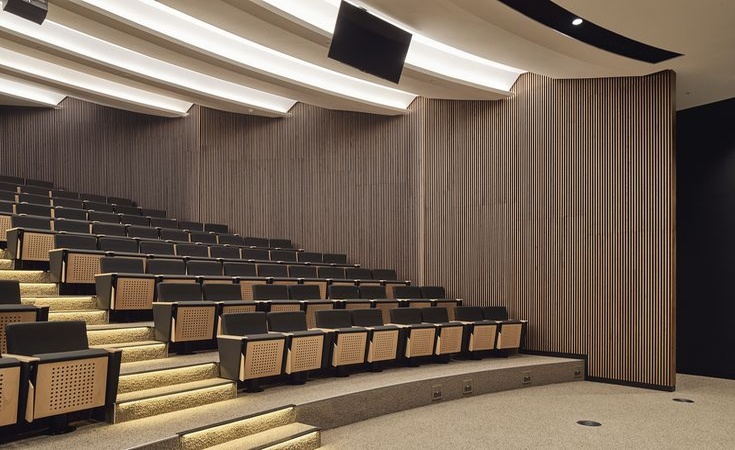
A great auditorium isn’t defined by the size of the hall or the beauty of the interior. Human beings will remember most the sound. In case the audience is not able to hear properly, or the voice is drowned in the background, this whole process collapses. This is the reason why the selection and designing of appropriate auditorium sound system is crucial, particularly in the areas such as Pakistan and UAE, where schools, business institutions, cultural centers and place of worship have the need to depend on articulation and uninterrupted coverage in a spoken word.
Contemporary auditoriums do not just require sound. They require high quality sound, intelligent control, reliable wiring and equipment that will serve both small scale and high-end productions. When all this comes into play, the audience does not think about the equipment they are just enjoying the experience.
Why a High-Quality Auditorium Sound System Matters
Auditorium is an area where all the words have to be heard by the last row with an equal clarity as that of the front seats. It can be an assembly of a school, a corporate event, a training seminar, a theatre production or a community group, but the sound has to be smooth, balanced and reliable.
An auditorium sound system is well designed such that it does not just make things sound louder. It ensures:
- Even sound coverage across all seating zones
- Clear speech for presenters, teachers, and performers
- Strong music reproduction without distortion
- Smooth transitions between microphones, media sources, and performers
- Easy operation for the technical staff
In the UAE and Pakistan, there are numerous auditoriums that are used to perform various roles in a single day. A hall where a morning lecture is given might require supporting a musical show later on in the night. In the absence of the appropriate infrastructure, changing between these applications is cumbersome and time consuming.
Key Components Needed for a Strong Auditorium Audio Setup
To design a system that can accommodate both speech and music, it is a combination of a number of items that come together. Between the parts, coverage, clarity and reliability are influenced.
Front of House (FOH) Speakers
The predominant loudspeakers are called FOH speakers and they provide sound to the audience. These should be of the size and acoustics of the room. In a decent design FOH speakers sound good and strong and they do not overpower the front rows of listeners and leave the further ones weak. The angle and positioning of them contribute significantly in the overall response of the entire auditorium.
Delay Speakers & Balcony Fills
Larger auditoriums especially those with balconies often struggle with even coverage. If the main FOH speakers are too far away, sound arrives late or loses clarity.
This is where Delay Speakers & Balcony Fills become essential. They reinforce sound in the far sections and keep everything synchronized. When tuned correctly, they blend so naturally that the audience doesn’t notice which speaker they are hearing from they simply hear clearly.
Stage Input Panels
Every auditorium needs a tidy and dependable way to connect microphones, instruments, and audio sources. Stage Input Panels provide these connection points. They remove the mess of loose cables and allow performers or presenters to plug in exactly where they need to, without extra equipment lying around.
Good stage input panels also protect the wiring behind the scenes, helping the system last longer and reducing technical issues right before an event.
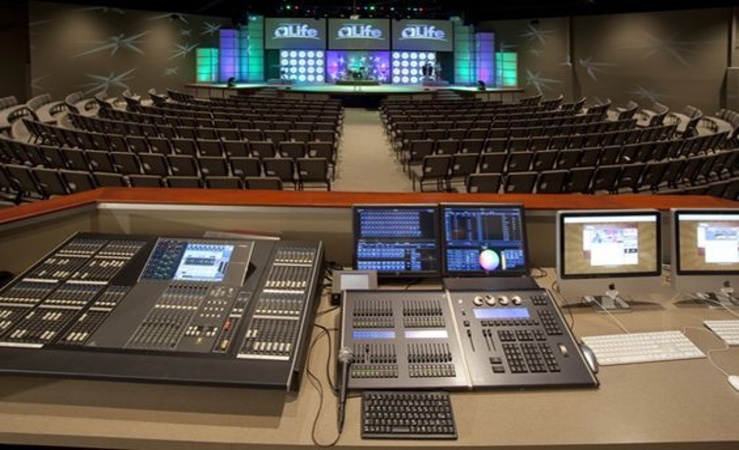
Digital Mixing Console with Scene Memory
Modern auditoriums rely heavily on Digital Mixing Consoles with Scene Memory. This tool gives the sound engineer complete control over every microphone, speaker, and media source from one place.
Scene memory is extremely useful for places that host repeating events. Engineers can save settings for:
- School assemblies
- Corporate seminars
- Theatre nights
- Religious sermons
- Music performances
The next time the same type of event happens, loading the saved scene restores all EQs, levels, and routing instantly. This makes the entire process faster and reduces mistakes.
Acoustic Panels & Ceiling Clouds
Even the best speakers cannot overcome a room with bad acoustics. Hard walls, empty ceilings, and large surfaces cause echoes and reflections that make voices hard to understand.
Acoustic Panels & Ceiling Clouds reduce these reflections. They help speech become clear, music sound warmer, and the entire room feel more controlled. In countries like Pakistan and the UAE where many auditoriums are built with marble floors or hard wall finishes acoustic treatment is often necessary to achieve true clarity.
Stage Boxes & Cat6/Audio Snake Infrastructure
No system is complete without a strong backbone. Stage Boxes & Cat6/Audio Snake Infrastructure form the internal wiring that connects everything together. These cables transmit the audio messages throughout the hall without any noise, interruption and dropout.
The properly designed wiring system will be able to ensure the auditorium sound system is stable, easy to troubleshoot and capable of being upgraded in the future. Even the best speakers or mixers will not work to their maximum capacity provided the internal wiring is weak.
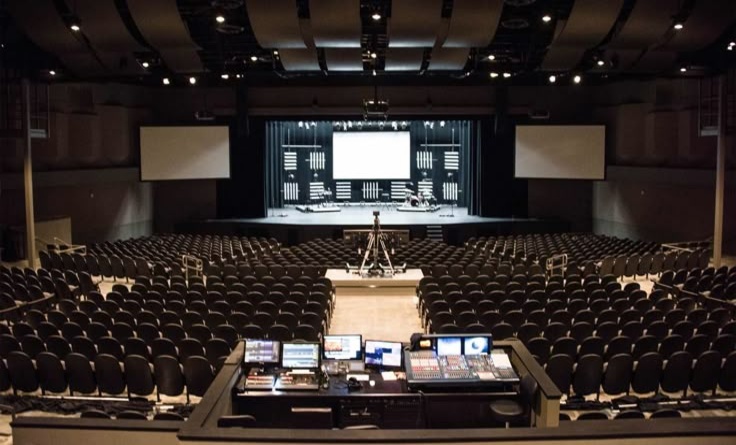
Understanding the Needs of Different Auditorium Types
All auditoriums are not utilized similarly. Others are constructed in the case of verbal events, whereas others have to accommodate concerts or drama performances. An auditorium sound system requires just as much purpose of space as equipment.
School and University Auditoriums
Educational institutions are dependent on articulate speech. Students who are far away at the stage should not strain to hear announcements, lectures, and presentations. Multi-functional halls predominantly in universities of Pakistan and the UAE are used:
- Orientation days
- Debates and competitions
- Cultural nights
- Conferences
- Musical events
Their systems need dependable FOH coverage, clean wireless microphone use, and acoustic treatment to control echoes.
Corporate Auditoriums and Training Halls
Businesses require spaces where communication must be accurate. Corporate halls often handle:
- Product launches
- Seminars
- Executive meetings
- Hybrid events with video conferencing
Here, clarity is more important than loudness. Delay speakers, ceiling clouds, and digital consoles become vital pieces in ensuring everything runs efficiently.
Government and Community Auditoriums
Pakistan and the UAE both host events for public gatherings, ceremonies, and official programs. These venues usually require:
- Larger coverage areas
- Higher sound pressure levels
- Stronger FOH systems
- Backup audio pathways
Durability and reliability take priority here, as equipment is used by many different people.
Cultural Theatres and Performance Spaces
Stage plays, musical concerts, and cultural presentations need audio that feels natural and immersive. Acoustic panels, powerful FOH speakers, and balanced stage monitoring become essential.
The system must support:
- Live singing
- Background music
- Multiple wired and wireless microphones
- Sound cues triggered during performances
A flexible auditorium sound system helps the technical team manage all of this smoothly.
What Happens When an Auditorium Isn’t Designed Correctly?
A poor setup can ruin even the best event. Common issues include:
- Feedback from microphones
- Uneven coverage across seating rows
- Sound arriving late to the balcony
- Harsh echo making speech muddy
- Bass build-up near walls
- Weak projection in the last rows
- Confusing controls for operators
A lot of these issues have not been instigated by speakers only – they are a result of poor planning. An effective auditorium system must be acoustically treated, well wired, digitally controlled and balanced in terms of loudspeaker positioning.
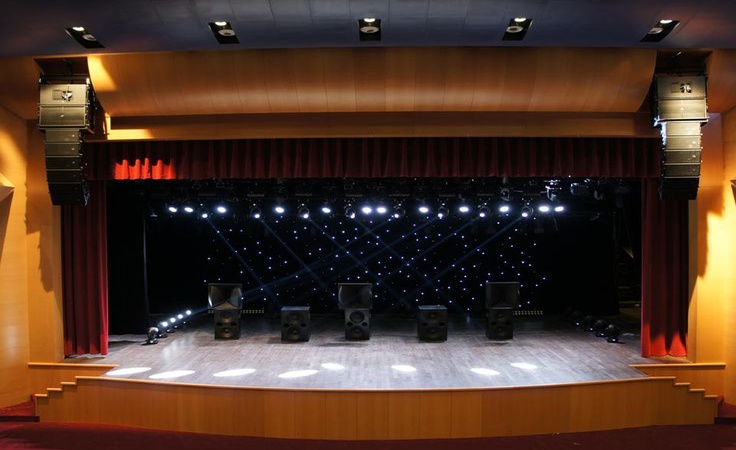
Designing an Auditorium Sound System That Works from Day One
The most reliable method is to follow a structured planning process. A good design usually includes:
1. Room Acoustic Evaluation
Understanding how the room behaves is the starting point. Measurements help identify reflection zones, echo points, and areas where sound naturally becomes blurry.
2. Loudspeaker Placement and Coverage Design
Using FOH speakers, delay speakers, and balcony fills based on the room shape prevents dead spots and overloaded areas. Proper aiming and tuning are crucial.
3. Wiring and Infrastructure Setup
A clean, protected wiring system makes the entire setup stable. Cat6 and audio snake lines ensure noise-free signal flow.
4. Mixing Console Configuration
The digital console is programmed with scenes, routing paths, EQs, limiters, and presets. This makes future events easier to manage.
5. Acoustic Treatment
Ceiling clouds and panels are installed to minimize the amount of echo and enhance clarity. Minor changes might result in significant differences.
6. Testing and Tuning
The system is then fine-tuned to suit the acoustics of auditorium after installation. This involves microphone checks, playback checks, and last-minute checks.
Why Sound Krafted Is Trusted for Auditorium Audio Solutions
Sound Krafted has worked on auditoriums of all sizes across Pakistan and the UAE, building systems that are easy to use and dependable during every event. Their approach focuses on practical solutions rather than unnecessary complexity.
They design systems using:
- Proper FOH speakers
- Well-placed delay speakers and balcony fills
- Clear stage input panels
- Digital mixing consoles with scene memory
- Acoustic panels and ceiling clouds for room treatment
- Strong stage boxes and Cat6/audio snake wiring
All the projects will be designed according to the size of the hall, events types, and the level of skills of operators. It may be a school, a corporate hall, a cultural center, but in any case, Sound Krafted wants to provide an auditorium sound system which functions for a long time starting with the first event.
Final Thoughts
Great auditorium sound system does not come by chance. It is through knowledge of the room, selection of the correct tools and installation of the tools with care. Proper wiring in combination with FOH speakers, delay speakers, stage inputs, digital consoles, acoustic panels, and proper wiring allow the audience to enjoy the event and not think about the equipment behind it.
Be it an educational establishment, a business venue, a community hall, or a performance theater in Pakistan or the UAE, the proper audio design investment will help your establishment to provide your space with clear, warm, and consistent sound over the coming years.