
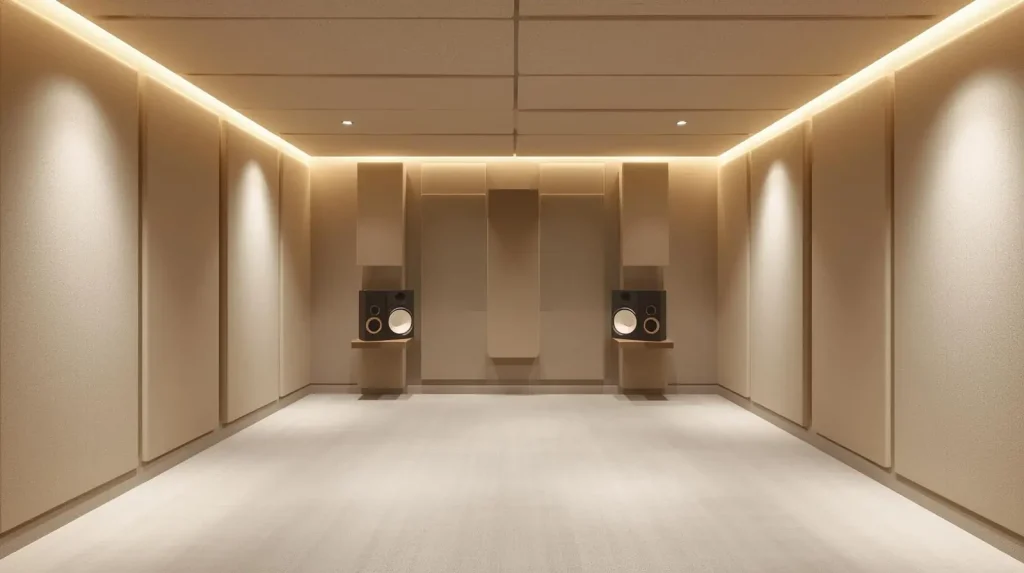
Creating a well balanced acoustic environment is essential for any space where clarity, comfort and sound quality matter. Whether you are treating a home studio, office, restaurant, classroom or large commercial facility, the way you position your acoustic panels will determine how effective they are. Many people buy high quality panels but still struggle with echo, muddiness and noise problems because they are not placing the panels strategically.
In this long form guide, you will learn proven acoustic panel placement tips for optimal sound absorption along with practical examples and layout recommendations. The goal is to help you reduce reflections, control reverberation and create cleaner sound without wasting materials or budget.
This guide is written with SEO focused clarity and naturally integrated keyphrases related to acoustic panel placement, sound absorption strategies, noise control and professional acoustic treatment.
Understanding How Acoustic Panels Work
Before diving into placement techniques, it is important to understand what acoustic panels actually do. Acoustic panels are designed to absorb sound waves so they do not bounce around the room. When sound energy hits a hard surface, it reflects. These reflections create echo, reverb and an overall noisy environment.
Panels made from materials like fabric wrapped fiberglass, polyester fiber, foam or wood acoustic slats absorb a portion of that sound energy instead of allowing it to reflect. Proper placement makes that absorption much more effective.
What acoustic panels can improve
- Speech clarity
- Vocal recordings
- Music production accuracy
- Meeting room communication
- Restaurant noise levels
- Home theater sound
- General comfort in echo prone spaces
What acoustic panels cannot do alone
- Block outside noise (requires soundproofing materials)
- Fix structural noise problems
- Reduce footsteps or vibrations through floors
Once you understand the goal of absorbing reflections inside the room, panel placement becomes straightforward.
Key Acoustic Panel Placement Tips for Optimal Sound Absorption
Treat first reflection points
First reflection points are the surfaces where sound from speakers or voices hits first before it reaches your ears. Treating these points reduces early reflections that cause audio smearing and echo.
To find first reflection points:
- Sit or stand in the listening or working position.
- Have someone move a mirror along the wall.
- Wherever you can see the speaker or sound source in the mirror is a reflection point.
- Place acoustic panels at those spots.
First reflection points exist on:
- Left and right side walls
- Front wall
- Ceiling
- Sometimes the back wall
This technique is especially important in studios, home theaters and conference rooms.
Position panels at ear height
Acoustic energy travels differently depending on room shape, but most problematic reflections occur around the horizontal line of your ears. Placing panels at general ear height increases absorption where sound is most actively traveling.
Typical ear height ranges:
- Seated position: 42 to 48 inches
- Standing position: 55 to 65 inches
If the space has mixed usage, place panels in a middle range so both seated and standing users benefit.
Spread panels evenly across reflective surfaces
A common mistake is clustering many panels on just one wall. This creates uneven absorption and can make the room sound unnatural. Spreading panels across multiple surfaces improves uniformity.
Aim to treat:
- At least 20 to 30 percent of each reflective wall
- Opposing walls to avoid flutter echo
- Corners that trap low frequencies
Even distribution results in a more balanced and pleasant acoustic environment.
Acoustic Panel Placement for Specific Spaces
Home studio or recording room
A home studio requires precise acoustic treatment for clean recordings and accurate monitoring.
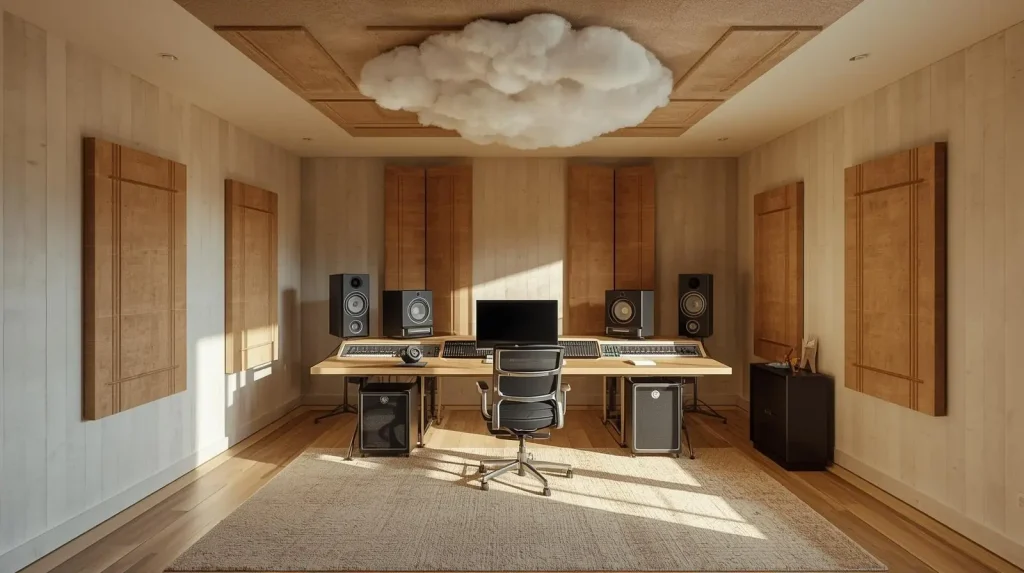
Key placement tips:
- Treat first reflection points on side walls.
- Place additional panels behind the speakers to reduce front reflections.
- Install ceiling panels or a cloud panel above the listening position.
- Treat the back wall with thicker panels to reduce slap echo.
- Add bass traps in corners if low end issues exist.
For vocal areas, surround the mic with panels to create a dry recording space.
Home theater or media room
Home theater acoustics are focused on reducing unwanted reflections and improving immersion.
Recommended panel placement:
- Side wall reflection points
- Ceiling above the main seating row
- Behind the seating area
- Back wall for rear speaker reflections
Rooms with lots of hard surfaces benefit greatly from panel coverage between seats and walls.
Office and conference rooms
Clear communication is vital in meeting spaces. Acoustic panels should be placed to reduce reverb and improve speech intelligibility.
Placement suggestions:
- Panels on the longest walls
- Panels around the table at ear height
- Ceiling acoustic baffles or clouds
- Panels near video conferencing equipment for better microphone pickup
Treating a minimum of 25 to 35 percent of wall space is ideal for office environments.
Restaurants and hospitality spaces
Restaurants often struggle with noise because of large crowds, hard surfaces and open layouts.
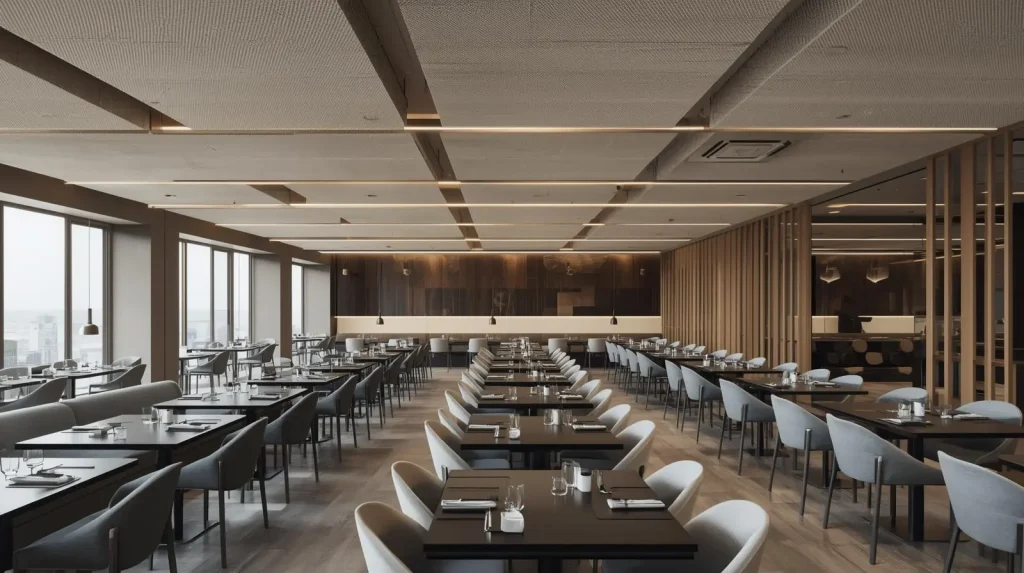
Effective panel areas include:
- Large open wall sections
- High ceilings
- Hallways that amplify sound
- Spaces above seating sections
- Entryways that create echo
Panels installed strategically across the dining area significantly reduce noise buildup and create a more enjoyable environment.
Classrooms and educational facilities
Schools need strong acoustic control to improve student learning and focus.
Priority zones include:
- Front teaching wall
- Side wall reflection points
- Ceiling areas
- Back wall to reduce bouncing sound
Children are more sensitive to auditory distractions which makes acoustic treatment especially important.
How Many Acoustic Panels Do You Need?
There is no perfect formula because room size, shape and materials vary. However, a good starting estimate is:
- Light acoustic treatment: Cover 15 to 20 percent of surface area
- Moderate treatment: Cover 25 to 35 percent
- Professional treatment: Cover 40 to 60 percent
Spaces with high ceilings, glass walls or lots of hard surfaces may require more coverage to achieve optimal sound absorption.
To calculate approximate needs:
- Measure your wall and ceiling surfaces.
- Multiply by desired coverage percentage.
- Divide by the size of your panels.
If unsure, start with moderate coverage, then add panels as needed.
Additional Tips to Maximize Acoustic Panel Efficiency
Do not place panels too high on the wall
Panels near the ceiling only absorb reflections happening above ear level. Always match the placement to how the room is used.
Leave small gaps behind panels if possible
A small air gap behind the panel increases low frequency absorption. Even a one inch gap can make a noticeable difference.
Combine materials for best performance
Mixing fabric panels, wood slat acoustic panels and bass traps helps control a wider range of frequencies.
Focus on symmetry
In audio production rooms, symmetrical panel placement around the listening position improves stereo imaging.
Avoid over treating the room
While panels help reduce echo, too many can make a room feel dull or acoustically dead. Balance is crucial.
Why People Trust SoundKrafted.com for Acoustic Treatment Solutions
When it comes to achieving professional acoustic results, people rely on SoundKrafted.com because we offer both high quality soundproofing materials and expert guidance. Many homeowners, creators and businesses struggle with choosing the right acoustic panels or figuring out how to position them effectively. Our team helps simplify the process with products and recommendations tailored to each space.
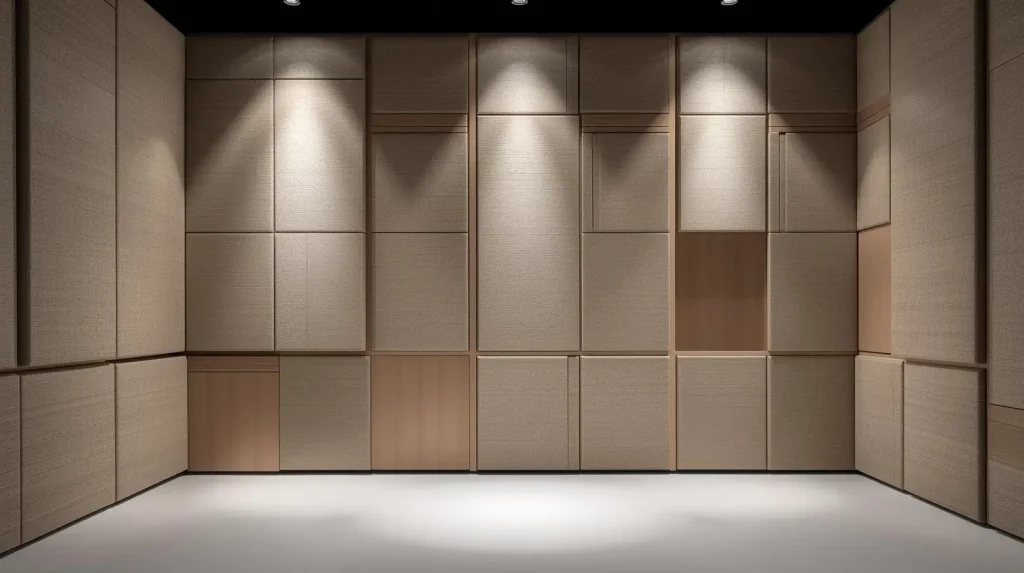
At SoundKrafted.com, we provide:
- Premium acoustic panels designed for strong sound absorption
- Soundproofing materials suitable for studios, offices, restaurants and residential spaces
- Customized acoustic treatment plans for improved performance
- Durable finishes, modern designs and eco friendly options
- Support from experienced professionals who understand real world acoustics
Customers trust us because we combine technical expertise with practical solutions that deliver measurable improvements. Whether you need a few panels for your home or a full service installation for a commercial space, SoundKrafted ensures reliable results.
Conclusion and Call to Action
Optimal acoustic panel placement is the key to achieving clear, comfortable and controlled sound in any environment. By focusing on first reflection points, treating walls evenly, considering ear height and understanding the needs of each type of room, you can dramatically improve sound quality without covering every inch of the space.
If you need high quality acoustic panels, soundproofing materials or expert advice on how to treat your room, visit SoundKrafted.com. Our team is ready to guide you with personalized recommendations that match your goals and budget.
Enhance your space with smarter acoustic solutions and experience the difference that proper sound absorption can make.